


 Back to all articles
 Queenstown Winter Guide: Five Places Worth Building a Trip Around
Snow-covered mountains, historic villages, pinot noir country and Fiordland from the air—the Queenstown regular visitors quietly prefer.
Australians will fly the better part of a day to Japan for snow. Queenstown is three hours away, direct, with no visa and nothing you could reasonably call jet lag.
For those arriving from further afield, it is a longer journey and a rarer one: an alpine winter running at full tilt while the northern hemisphere sits in high summer.
However you arrive, what you arrive into is a more deliberate Queenstown than the one most people picture. Between June and September, the valley narrows its offering, the lake stills, the light goes long and low, and the road to Glenorchy empties by mid-afternoon. What remains is the version of this place that regular visitors quietly prefer. Fewer options. Better ones.
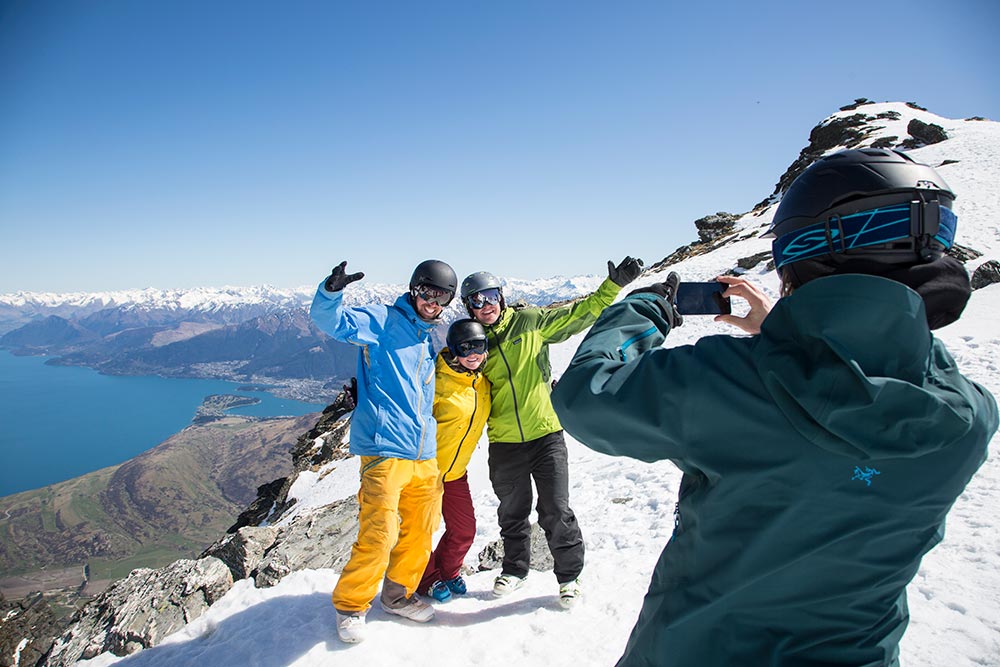
Coronet Peak and The Remarkables
Queenstown is one of very few places on earth where you can ski above a lake, at altitude, and be back at a table with a wine list by seven.
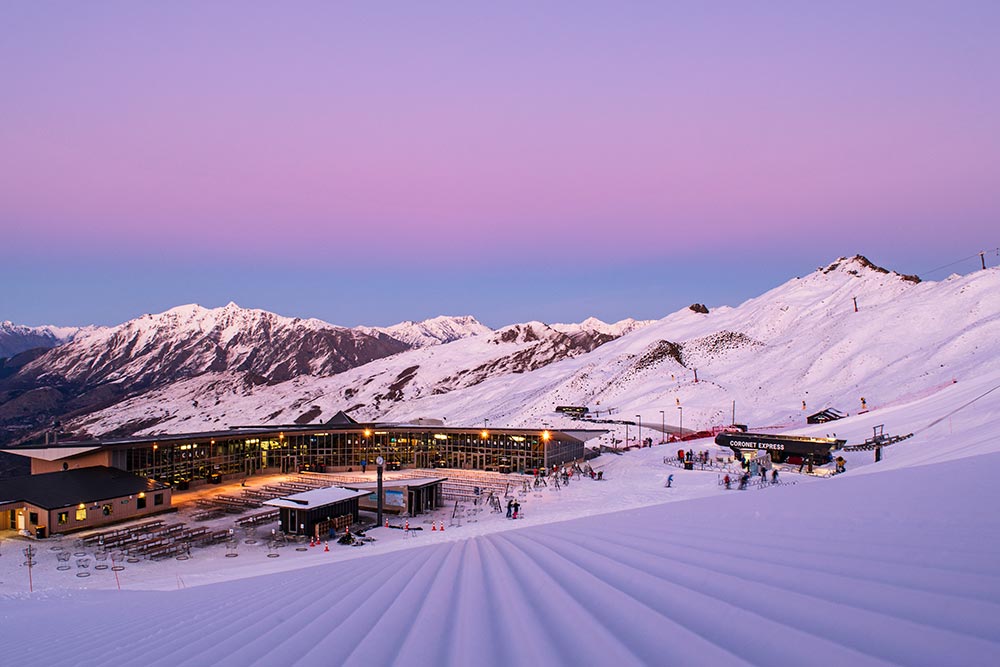
The two fields closest to town could not be less alike. Coronet Peak is the older of the two, roughly twenty-five minutes from the centre, and the only field in the region with regular night skiing—a genuine novelty, and the reason a Friday evening on the mountain feels unlike a Friday evening anywhere else.
The Remarkables sits higher and holds its snow later, with wider, more forgiving terrain and the kind of view down the Wakatipu Basin that stops conversation on the chairlift.
The lifts typically open in June and run into early October, but the reliable weeks—the ones that reward a flight—sit from mid-July through late September. Book accommodation before you book flights, not after. In a valley with this little land, the best properties are committed well ahead of the snow.
If you have the days, the two Wānaka fields, Cardrona and Treble Cone, are within reach and worth the drive over the Crown Range for the change of aspect alone.
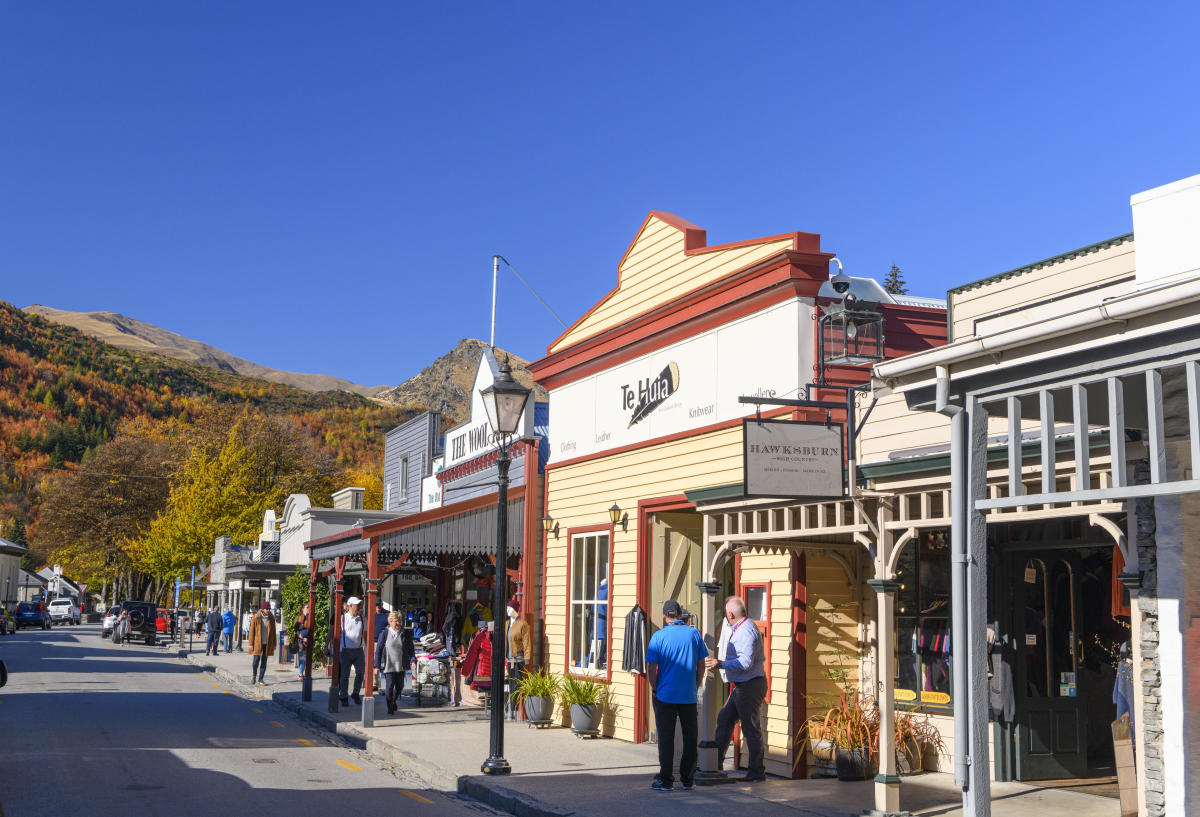
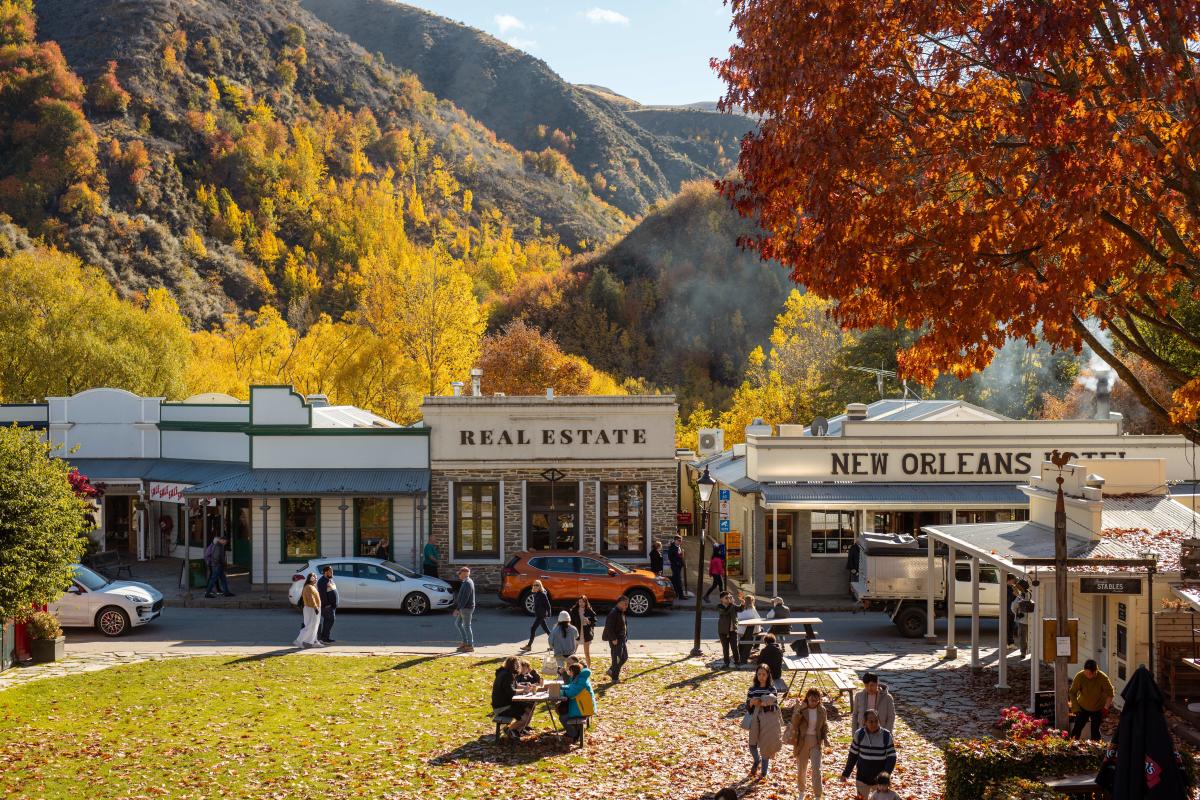
Arrowtown
Twenty minutes from Queenstown, and a different century.
Arrowtown was built on gold in the 1860s, and unlike most towns of its vintage, it was never rebuilt over. The miners’ cottages on Buckingham Street are the originals. So is the Chinese settlement on the edge of the village, restored and left deliberately unglossed—a sobering, quietly moving record of the men who came for the goldfields and were made to live apart from the town they worked beside.
In winter, the village does something it cannot manage in autumn, when the poplars pull crowds from across the country: it goes quiet. Snow on the Crown Range behind, woodsmoke in the street and a handful of very good rooms to sit in.
It is small enough to walk end to end in twenty minutes and interesting enough that you will not. Buckingham Street runs on independent boutiques, galleries, jewellers working with local gold and a scattering of long-standing family businesses rather than the chains found elsewhere.
The coffee is roasted on the street it is served on and is a genuine reason to make the drive by itself. The restaurants punch a long way above a village of this size, from Spanish tapas to northern Italian to a garden café in a restored cottage. There is also a confectionery shop that has been quietly undoing people’s willpower since 2004. Our Queenstown dining guide covers all of it properly.
One practical note: Arrowtown sits inland in a valley that holds the cold, and mornings here are frequently still frosty long after the Queenstown lakefront has thawed. Take an extra layer and wear something you can walk in.
Allow half a day. Most people allow an hour and regret it.
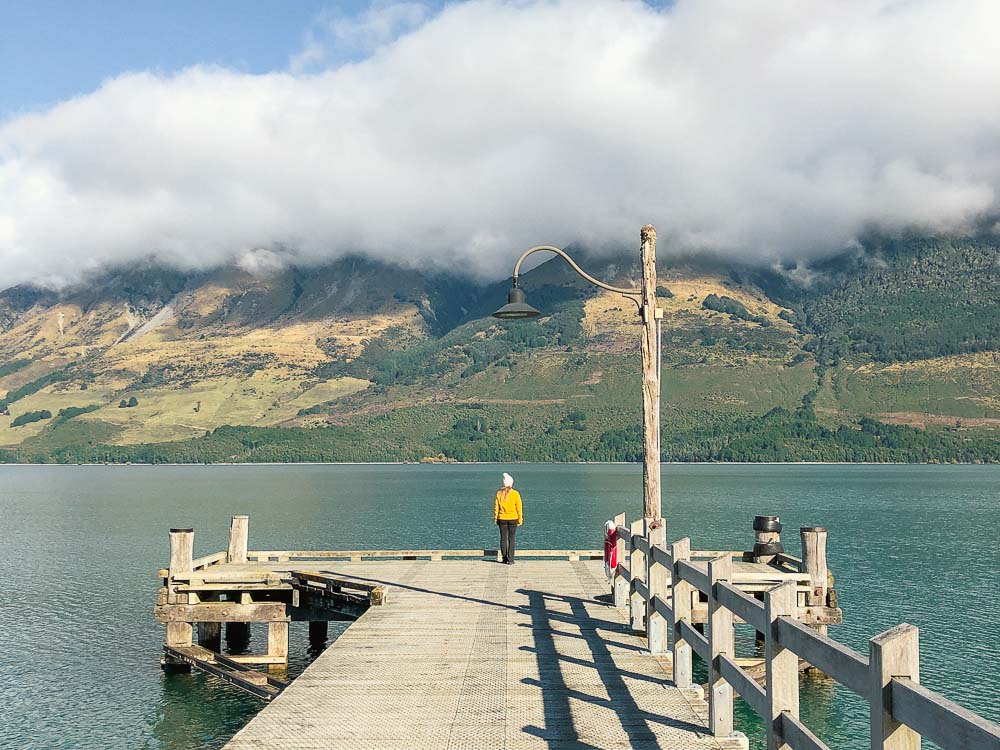
Glenorchy and the Head of the Lake
Forty-five minutes from Queenstown along the western shore of Lake Wakatipu, on what is credibly one of the finest short drives in the country.
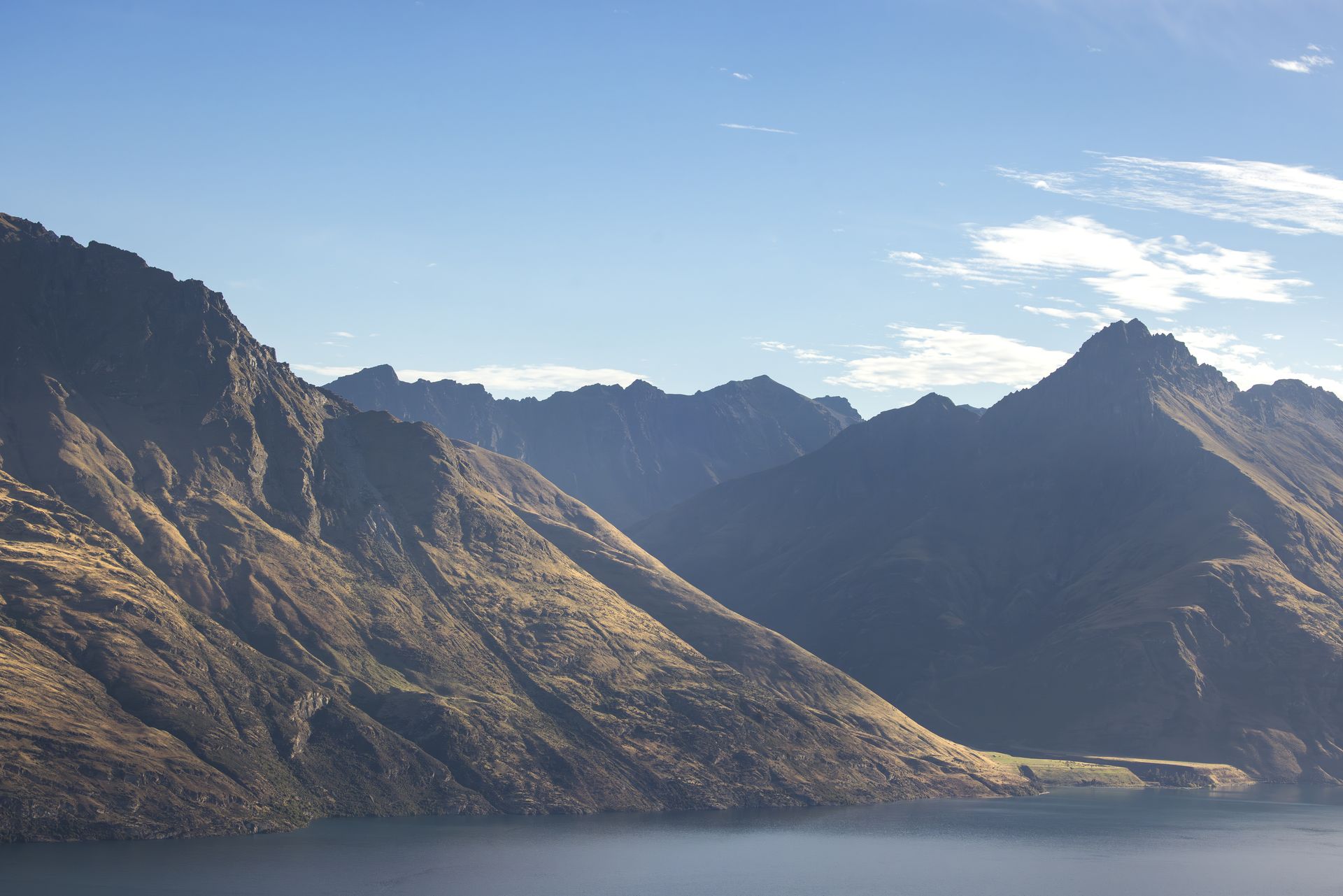
The road is the destination as much as Glenorchy is. It runs tight to the water, with the Bayonet Peaks above and the lake dropping away below, and there are enough places to stop that the drive routinely takes twice as long as it should.
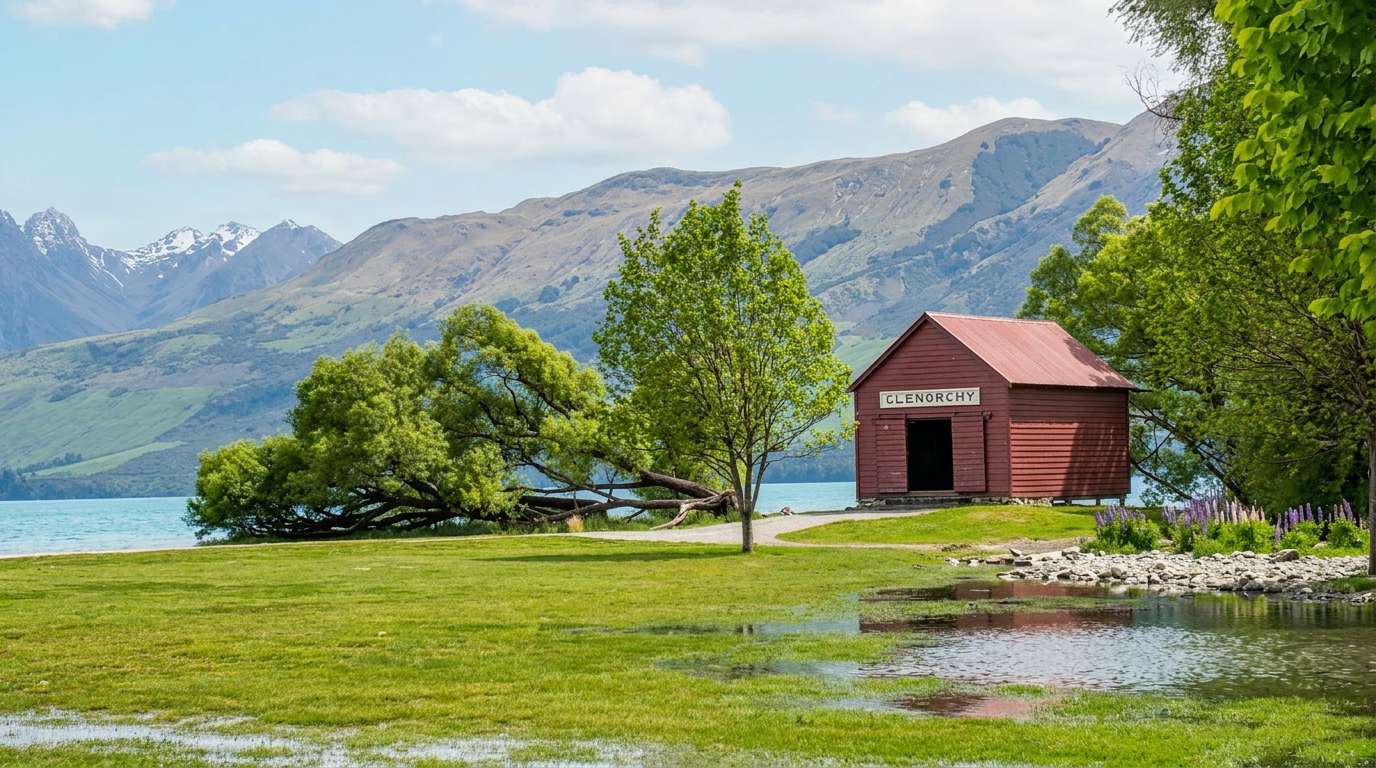
At the far end sits Glenorchy: a wharf, a red shed that has been photographed several million times, and a view up the Rees and Dart valleys into country that has stood in for Middle-earth, Narnia and a good deal else.
Winter is the season this drive is at its best and its most demanding. Snow and black ice are real considerations on the shaded corners, and a light rental car is not the right tool. Take a driver, or take the sealed road slowly and in daylight.
What you get in exchange is a valley under snow with almost no one else in it.
Gibbston Valley
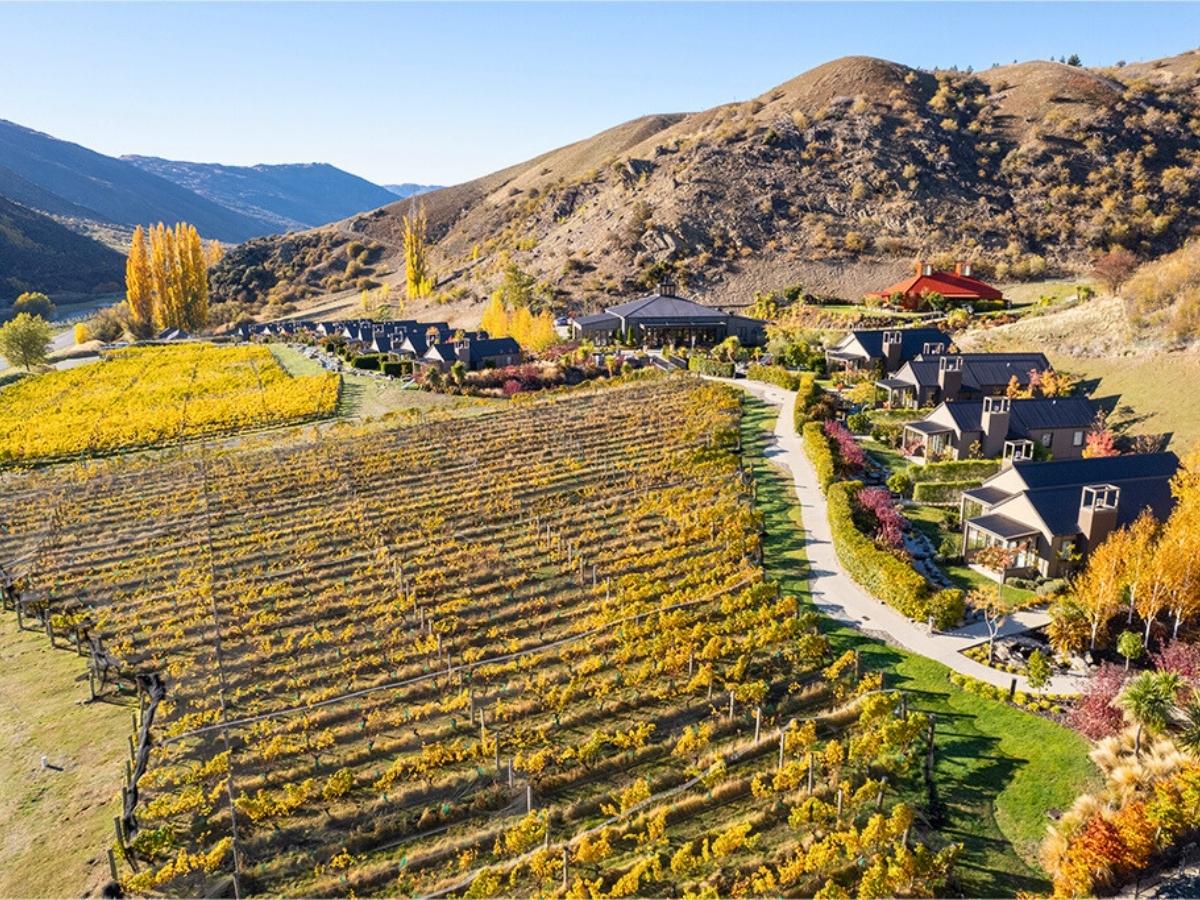
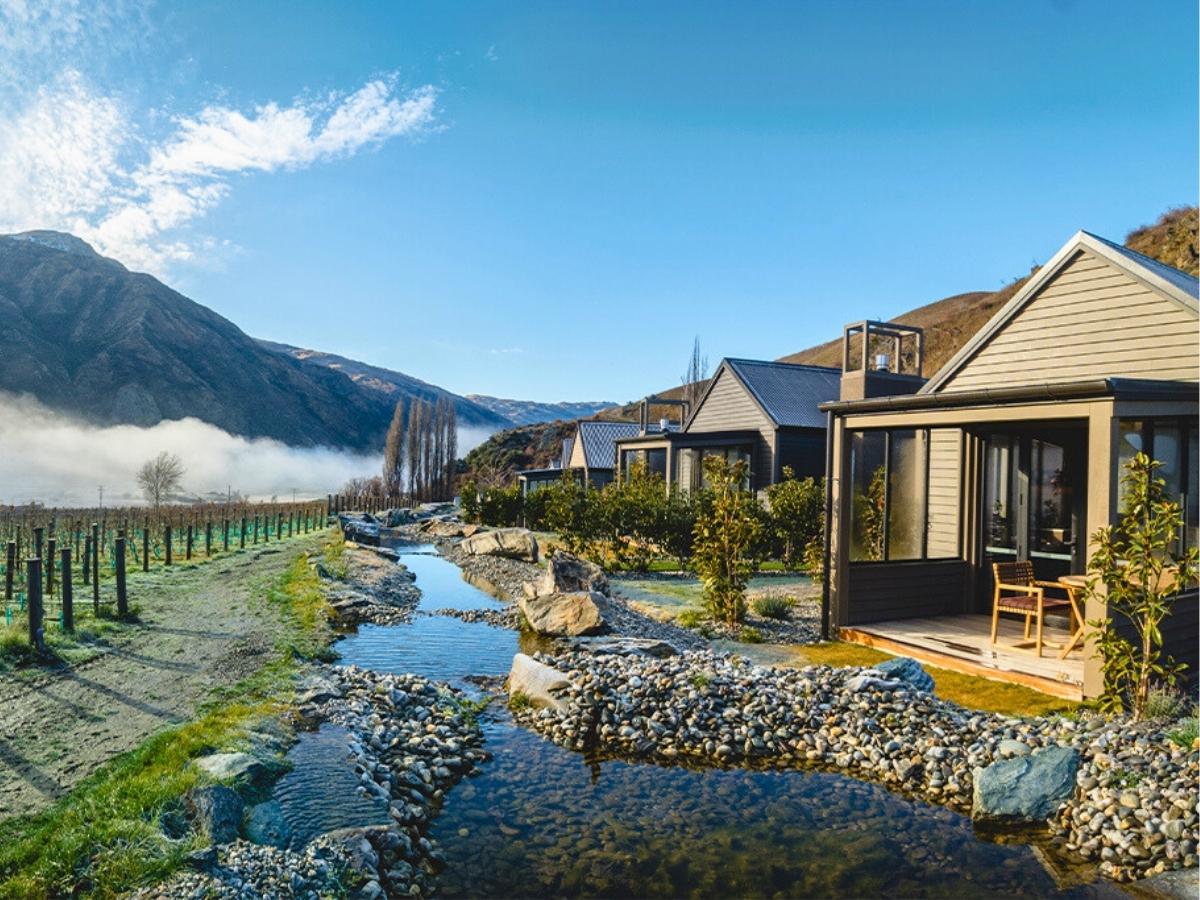
Twenty-five minutes east, through the Kawarau Gorge, into the coldest commercially viable wine country in New Zealand.
Gibbston sits high and exposed, and that severity is the entire point: it produces pinot noir with a structure and perfume that the warmer sub-regions of Central Otago cannot replicate.
In winter, the vines are bare, the cellar doors are calm, and you will frequently find yourself tasting with someone who actually made the wine rather than someone rostered to pour it. For anyone who takes wine seriously, that trade is worth making.
Pair it properly. A morning on the mountain and an afternoon in the gorge is one of the best-balanced days Queenstown offers, and it requires nothing more elaborate than a car and a driver.
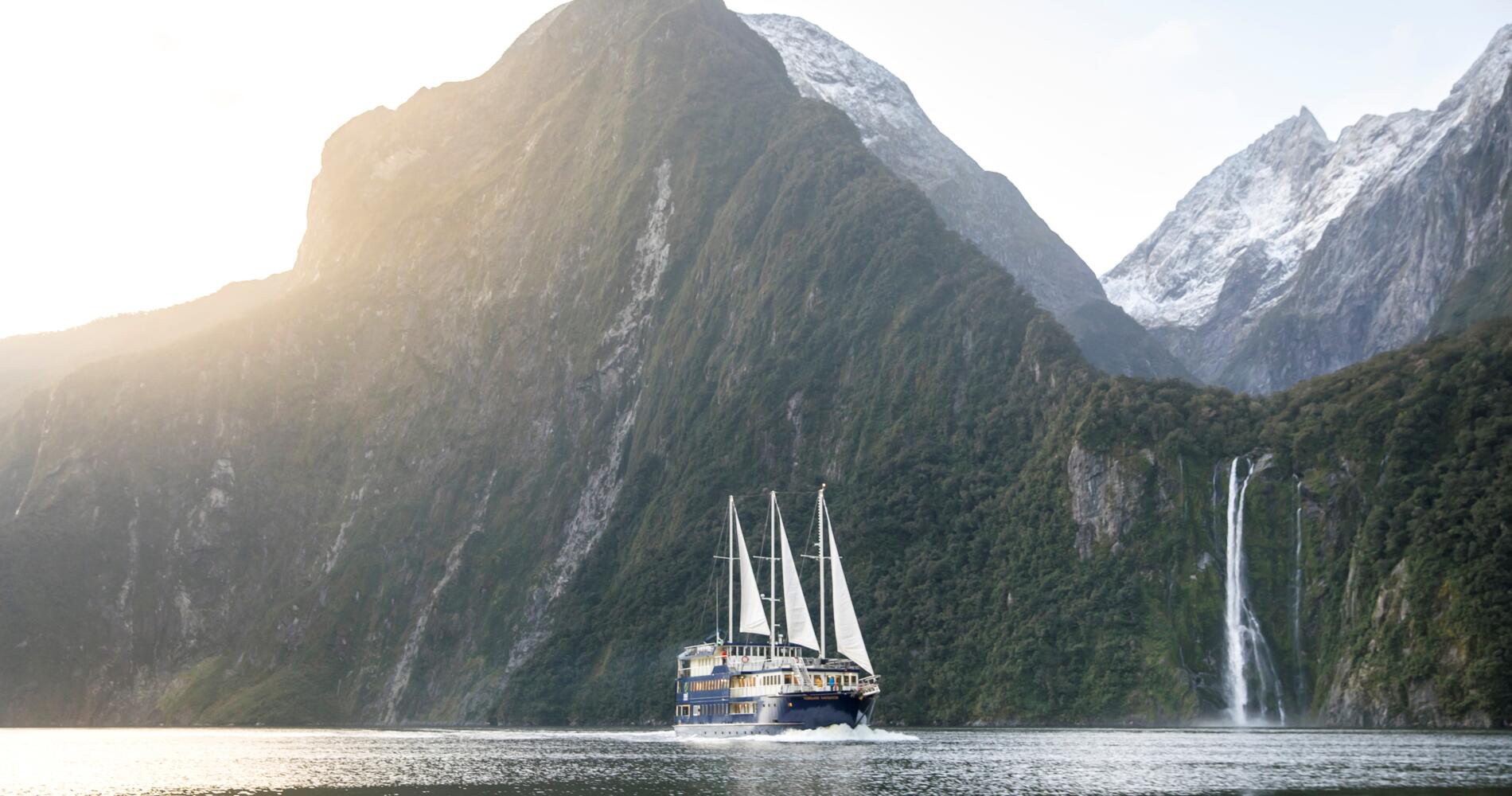
Milford Sound and Fiordland
The most common winter question we hear is whether Milford is worth it out of season. It is, but only if you go about it the right way.
By road, Milford Sound is roughly three and a half to four hours each way from Queenstown, which makes a self-driven day trip an eleven- to twelve-hour undertaking on an alpine road that can close at short notice in winter. That is a long day in a short season.
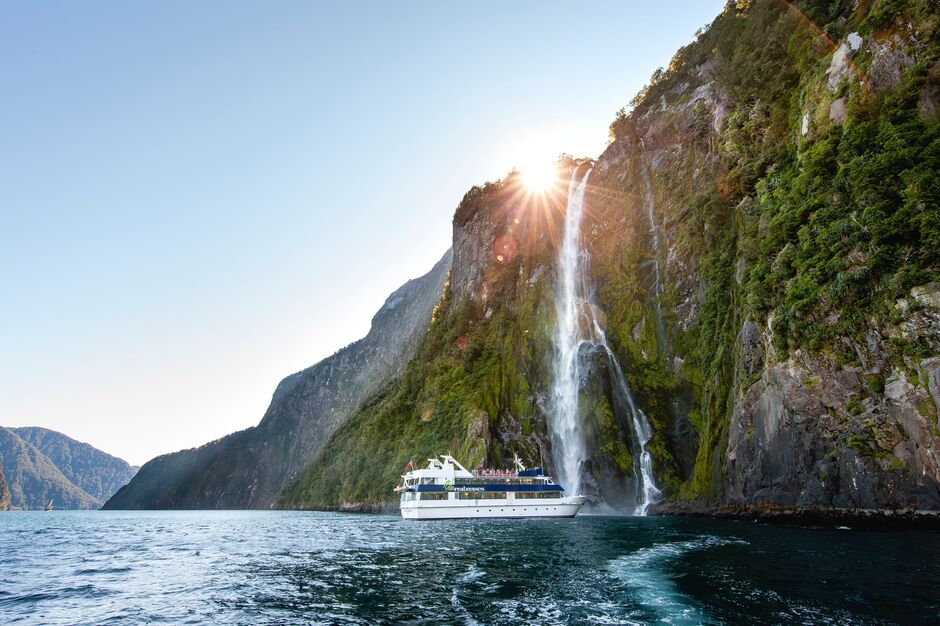
By air, it becomes something else entirely. Scenic flights from Queenstown run around forty minutes each way over the Southern Alps and into Fiordland, and the winter routing—fresh snow on the tops, low sun on the rock walls—is arguably better than the summer version.
Fiordland receives extraordinary rainfall, which means waterfalls, which means the days most people would write off as bad weather are frequently the most spectacular on the water.
Flights are weather-dependent. Build a spare day into the itinerary rather than a spare hour.
One Thing to Take From This
Winter does not make Queenstown smaller. It makes it more legible.
The valley in July asks less of you than the valley in January: fewer decisions, fewer crowds, less competition for the good table and the good room.
What it asks instead is that you commit early and choose properly. The properties that make a winter here memorable are a very small set, and they are spoken for months in advance.
If you are considering a Queenstown winter, the conversation is worth having sooner than feels necessary.
Winter does not make Queenstown smaller. It makes it more legible.
Choose the right stay before the snow arrives
The best Queenstown winter properties are a small and sought-after set. Secure the right base early, then build the mountains, wine country, historic villages and Fiordland around it.
By Stay Luxe