
4.5 / 5
Contact us 24 hours, 7 days

Where to Eat in Auckland: Michelin Stars, Neighbourhood Dining and Serious Coffee

Stay Luxe Journal · Guides

Where to Eat in Auckland: Michelin Stars, Neighbourhood Dining and Serious Coffee

A neighbourhood-by-neighbourhood guide to Auckland’s newly starred restaurants, waterfront tables, vineyard lunches and defining coffee culture.
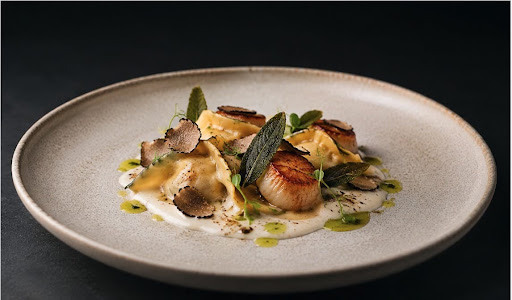
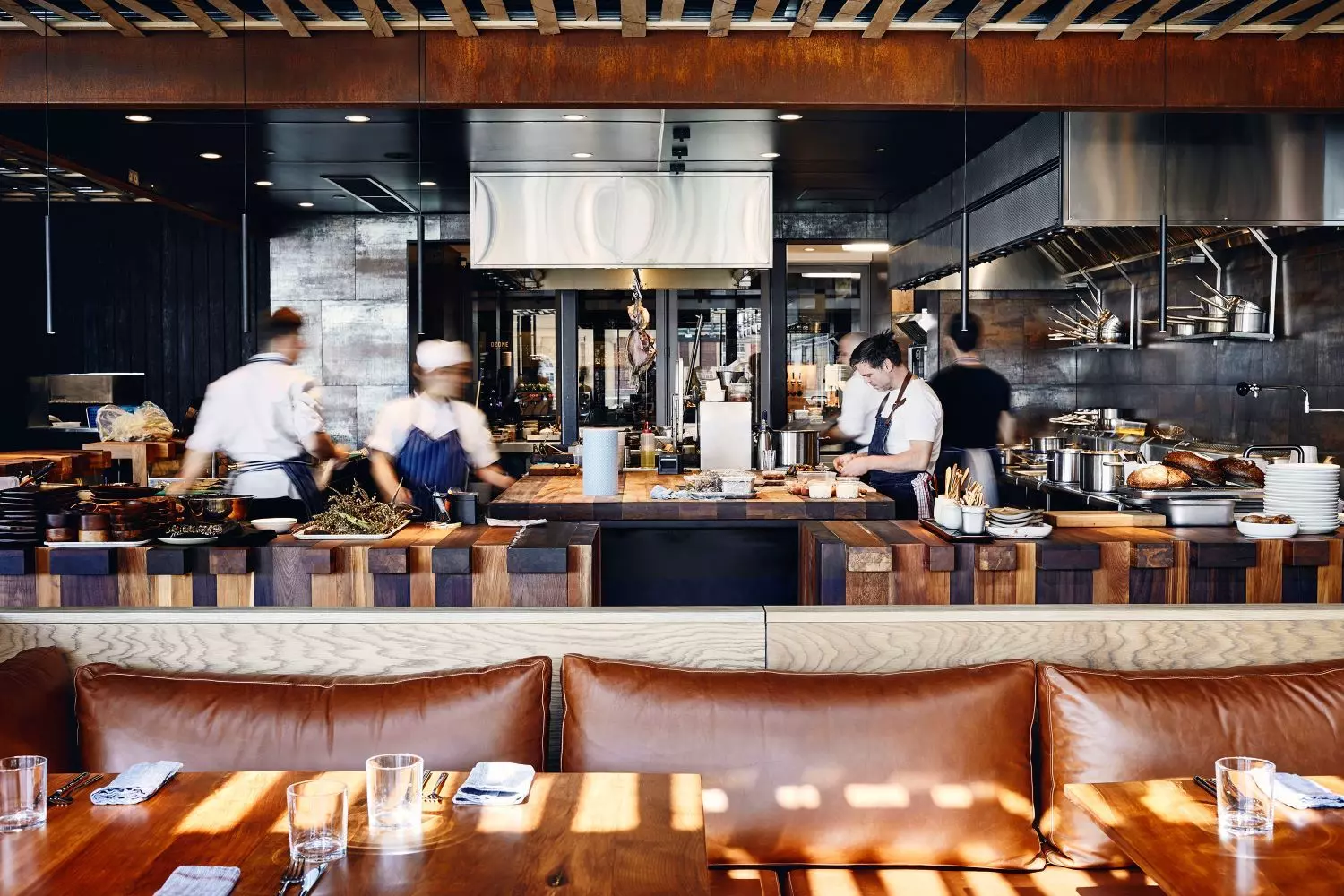
A beautifully presented dish from Auckland’s dining scene
Michelin firstFive Auckland stars
Best forFood-led city stays
Island escape40-minute ferry
Our adviceBook before you fly

For years, Auckland’s food scene was one of the better-kept secrets of the Pacific. Locals knew. Visitors found out over a first flat white and wondered why nobody had told them.

As of this winter, somebody has. On 30 June 2026 the MICHELIN Guide arrived in New Zealand for the first time, held its inaugural ceremony in Auckland, and handed the city five of the country’s fourteen one-star awards. The secret is now firmly out, and the best tables will only get harder to book. Here is where to spend your appetite, neighbourhood by neighbourhood.
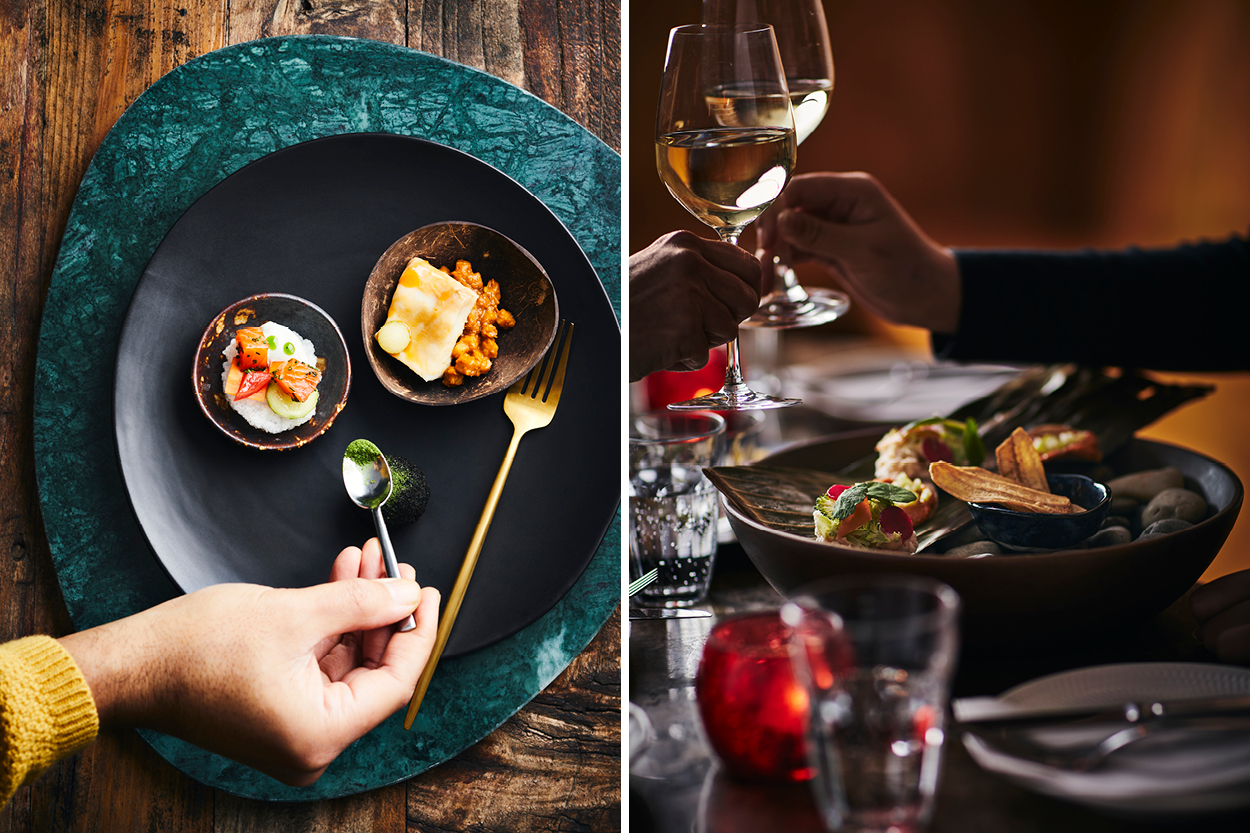
Michelin stars

Auckland’s First Michelin Star Restaurants: Tala and Ahi

Start with the headline act. Tala, on Parnell Road, is chef Henry Onesemo’s multi-course expression of Samoan cuisine, and it is now the only Samoan restaurant in the world to hold a Michelin star. That sentence alone should tell you how singular the experience is. This is deeply personal cooking, traditional flavours reinterpreted course by course, and there is nothing else like it in this hemisphere or any other.

Then there is Ahi. The name means fire in te reo Māori, and the kitchen keeps its word: the menu revolves around a wood-fired hearth, New Zealand ingredients traced back to the farms and waters they came from, cooked with real precision above the downtown waterfront at Commercial Bay. If you want one dinner that explains what modern New Zealand cooking is, this is it.

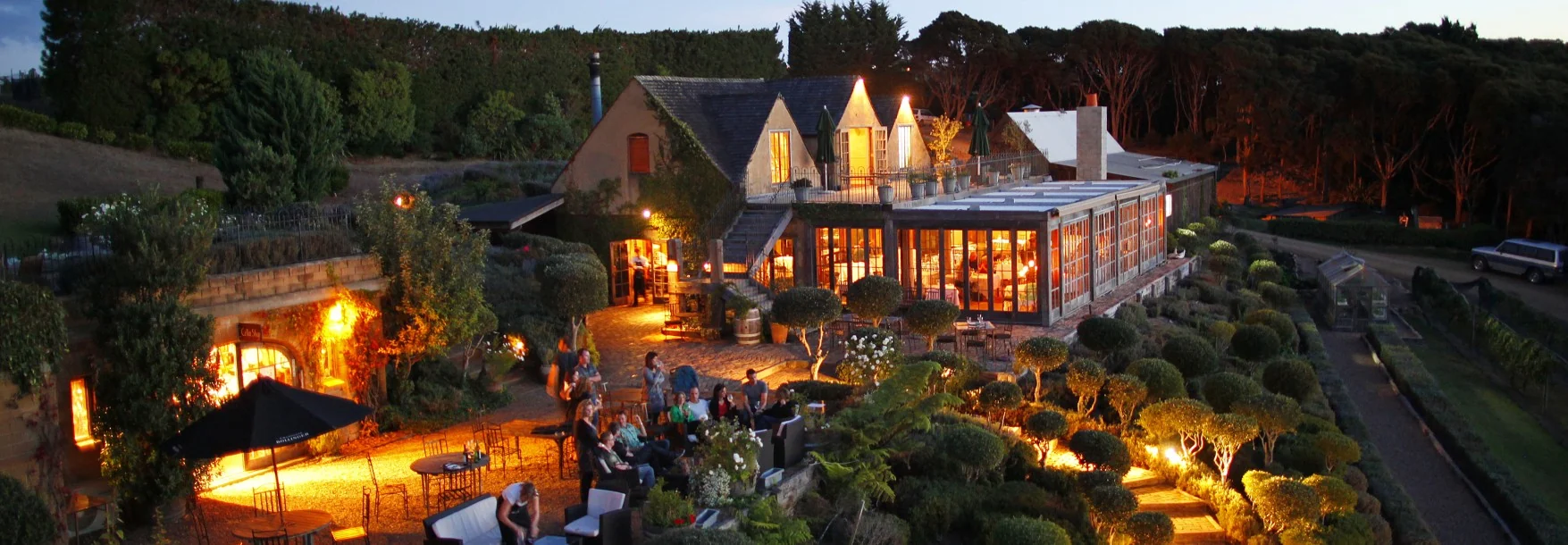
Auckland’s remaining stars round out a persuasive case for lingering: Paris Butter in Herne Bay, and two vineyard restaurants on Waiheke Island, Mudbrick and The Estate at Tantalus, both a short ferry ride from downtown. Every one of them now sits on the radar of travelling diners worldwide. Book before you fly, not after you land.
Downtown

Where to Dine in Downtown Auckland: Britomart and the Waterfront

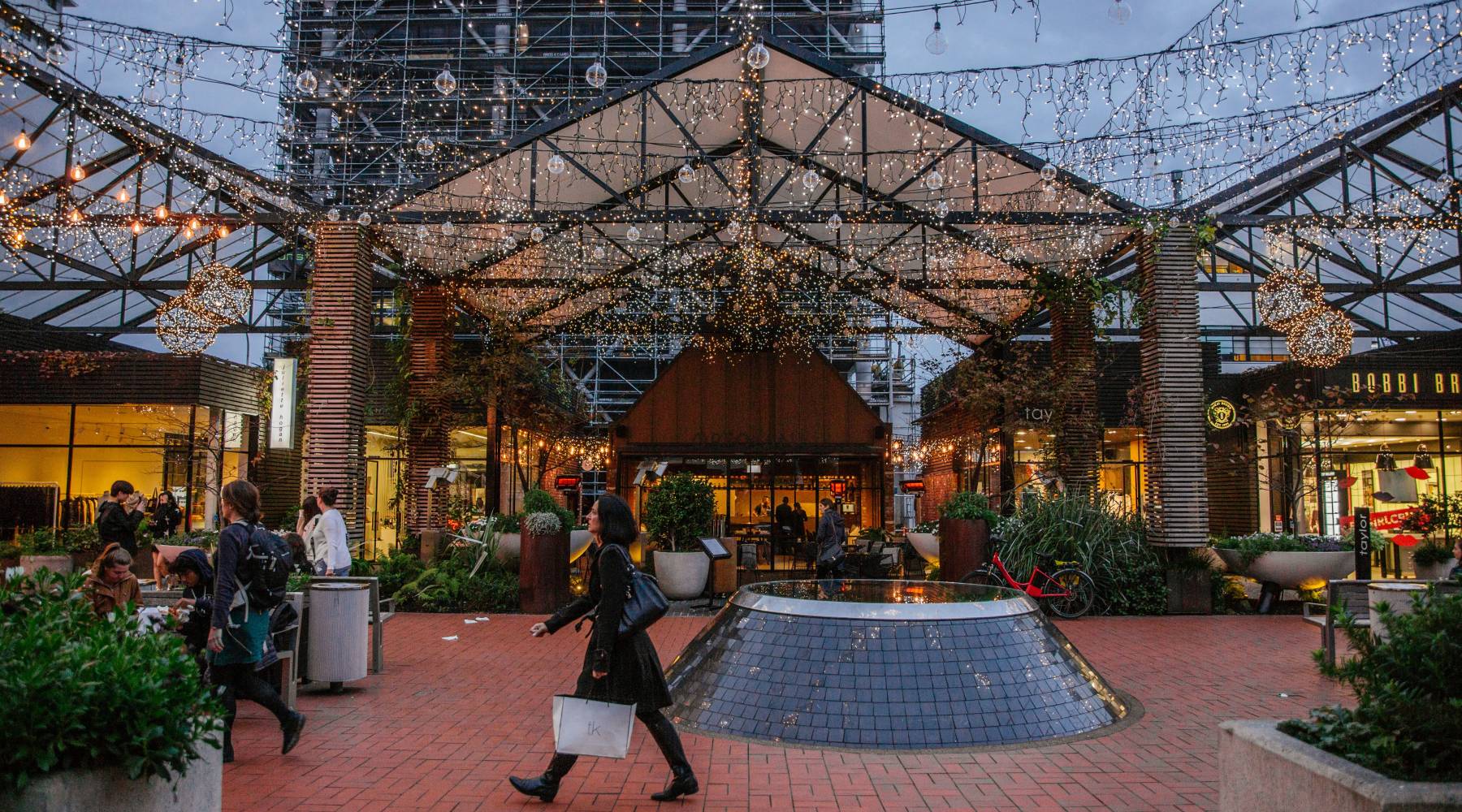
If you are staying central, Britomart is your dining room. The precinct’s restored heritage buildings hold some of the city’s most reliable eating, much of it from the Savor Group, whose restaurants have a habit of never disappointing. The one caveat: book. These rooms fill quickly, especially from Thursday onward.

Amano is the anchor. Set in Britomart’s historic Altrans and Quay buildings opposite the Waitematā, it moves through the day the way the best Italian rooms do: pastries and proper coffee in the morning, handmade pasta at lunch, and a dinner service worth dressing for. It is that rare thing, a restaurant equally right at breakfast, lunch and dinner, and the bakery counter alone justifies the walk. The group’s other Britomart rooms carry the same assurance, from contemporary Japanese at Ebisu in a heritage building near the water to the conservatory calm of Ortolana in the Pavilions.

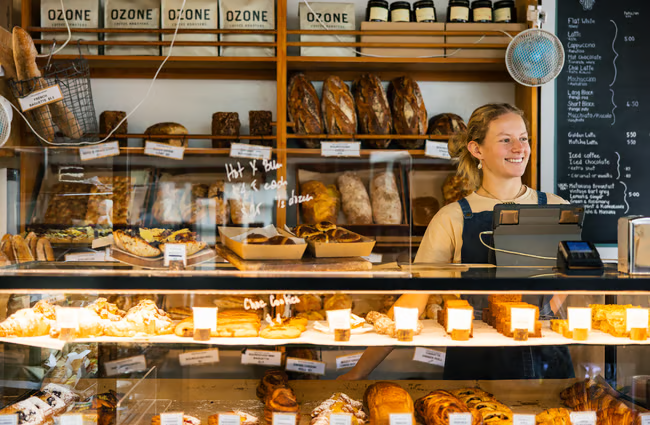
A few doors along on Galway Street, Daily Bread has turned a generous heritage space into one of the city’s most loved bakeries. The sourdough is the point: dark, burnished loaves with real substance, the kind of bread that makes the supermarket version feel like a rumour. Come early, order more than you planned to.

And for the coffee that starts a downtown day, Kokako’s coffee bar at Commercial Bay pours some of the finest cups in the city. The roaster has been at it since 2001, certified organic and Fairtrade throughout, and the care shows in the cup. Conveniently, Ahi is in the same building. Consider that a lunch plan assembling itself.

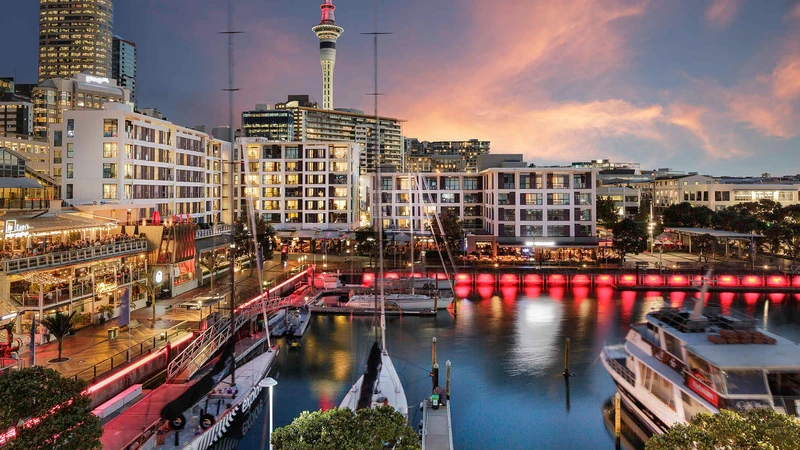
When the afternoon calls for water views, follow the harbour west to Bravo at Cracker Bay, set right on Westhaven Marina with boats moored at the terrace and the Waitematā beyond. It moves with the day, from morning coffee to fresh seafood and a glass of wine as the sun drops over the harbour, and it is the kind of address where a quick stop develops other ideas.
Neighbourhood
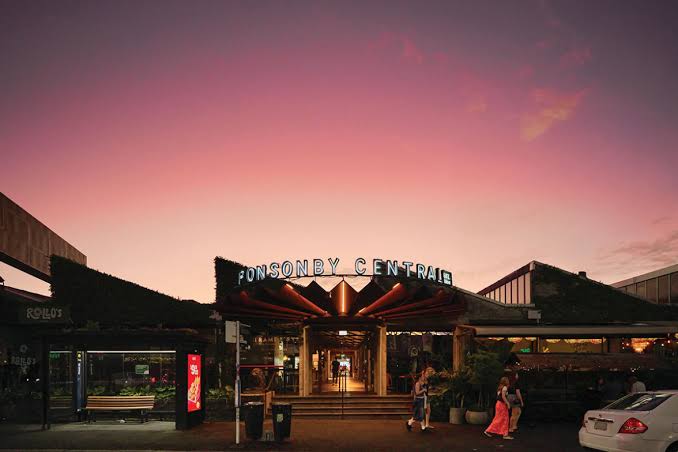
Ponsonby neighbourhood in Auckland

Exploring Ponsonby: Ponsonby Central, eighthirty and a Slow Walk Down Ponsonby Road

When you are ready to leave the waterfront, head up the ridge. Ponsonby Road is where Auckland goes when it dresses down without lowering its standards, and Ponsonby Central is the easiest way in: a covered cluster of kitchens and providores where you can wander between cuisines until something claims you. It is the kind of place where a quick look around becomes a long lunch, and no one at the table minds.

The coffee here belongs to eighthirty, the specialty roaster that has been supplying the city with sustainably sourced beans since 2009 and roasts right in the heart of Ponsonby Central. Order a flat white, find a corner, and watch one of Auckland’s best streets go about its morning. This is the unhurried version of the city, and it repays the time.

Then give the rest of the morning to the street itself. Ponsonby Road runs close to two kilometres along the ridge, and the correct pace is slow: boutique shops and design stores between the villas, cafe options that never seem to end, and some of the best of New Zealand fashion within a few hundred metres. Look for local labels of the calibre of Karen Walker, Zambesi and Ruby, clothing designed and made for this part of the world, and a far better souvenir than anything sold at the airport. When the next coffee falls due, Allpress at 266 Ponsonby Road pours one of the country’s defining roasts. Coffee, a fitting room, another coffee. Nobody walks Ponsonby Road quickly, and nobody should.

Stay for the evening and the street keeps providing. Prego is the icon, an Italian dining room that has fed Ponsonby for decades and welcomes everyone from anniversary couples to families with children in tow; there are few better measures of a neighbourhood restaurant than how many generations it can seat at once. A few doors along at 198 Ponsonby Road, The Broken Lantern makes the case for a slower kind of night. The room is all bare brick, raw concrete and greenery growing indoors, an eclectic space that feels collected rather than decorated, and the bar takes its craft seriously: considered cocktails, beer from local brewers, and a wine list that leans towards organic and low-intervention producers from New Zealand and beyond. Start at one, finish at the other.
Island dining

Cross the Harbour to Waiheke Island: Mudbrick and The Estate at Tantalus

Then there is the lunch that requires a boat. The ferry from downtown Auckland reaches Waiheke Island in about forty minutes, and it now carries you to two of the country’s first Michelin stars. This is the long lunch perfected: vines, sea, and nowhere you need to be.

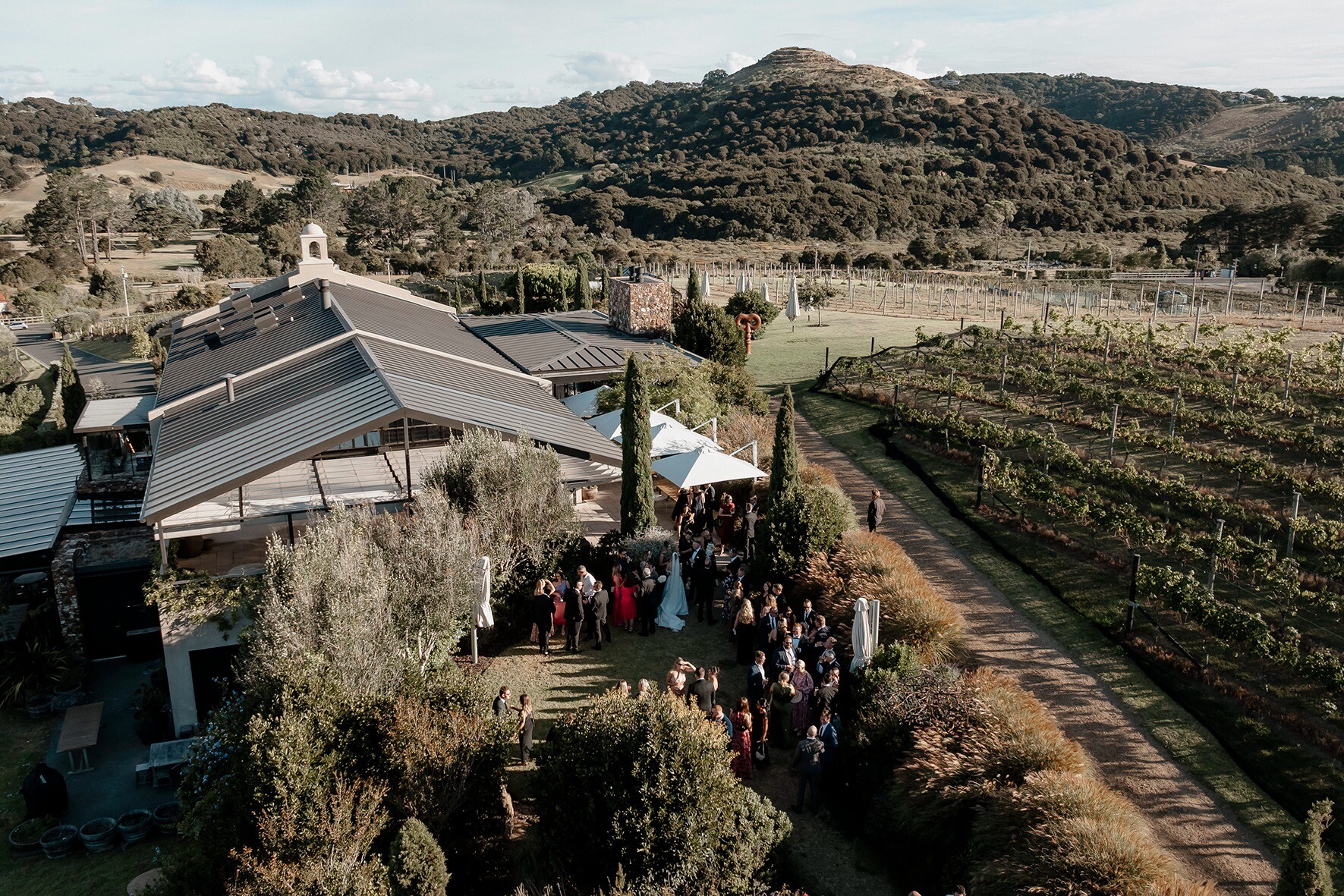
Mudbrick is the established romance, a vineyard estate above Oneroa where the rows of vines run down towards the water and the city skyline sits across the gulf, close enough to admire and far enough to forget. The Estate at Tantalus makes its case among the vines of the Onetangi valley, a winery restaurant whose star confirmed what its regulars had long argued. Book whichever you can get, or let the decision be made by what is available; there is no losing draw.

The only real question is the return sailing. More than a few long lunches on Waiheke have quietly become a few days on the island, and the island is built for exactly that: beaches in the morning, cellar doors in the afternoon, dinner with the lights of Auckland strung along the horizon. Pack lightly, but pack.

Eat slowly. Book early. Let the city feed you properly before you carry on south.

Plan your Auckland stay with Stay Luxe

Stay close to the tables that matter

A city’s food scene is best measured by how it makes you rearrange your plans, and Auckland, newly starred and quietly confident, will rearrange yours. A waterfront residence puts Britomart, Commercial Bay and the ferries at your door; a retreat on the North Shore or the eastern bays trades footsteps for views and keeps the city fifteen minutes away.

Explore Auckland properties

By Stay Luxe
What to do in Queenstown in summer?

Stay Luxe Journal · Summer Guides

What to do in Queenstown in summer?

Six places that make the most of Queenstown’s long light, from alpine tracks and quiet water to wine country and Fiordland.

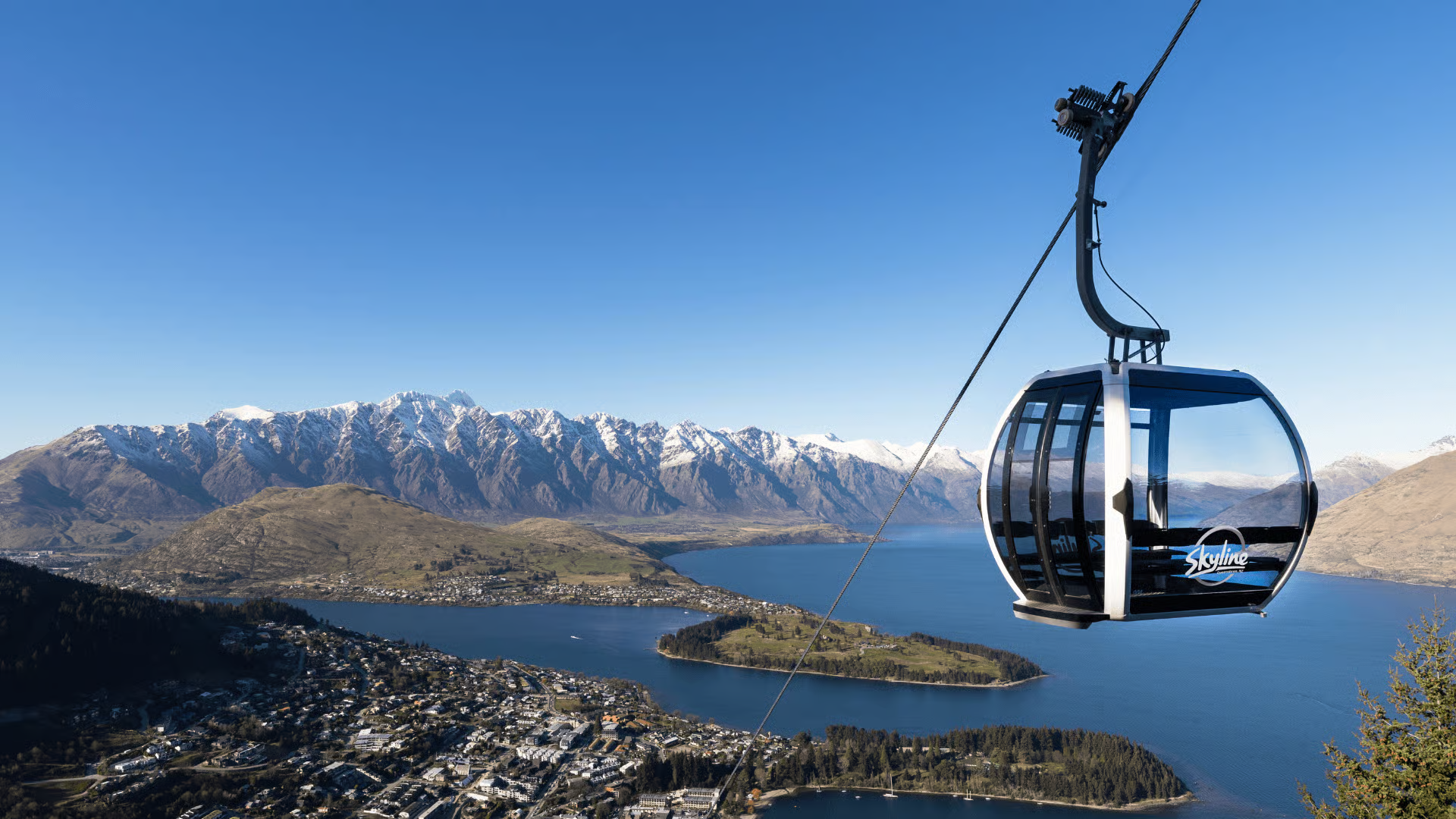
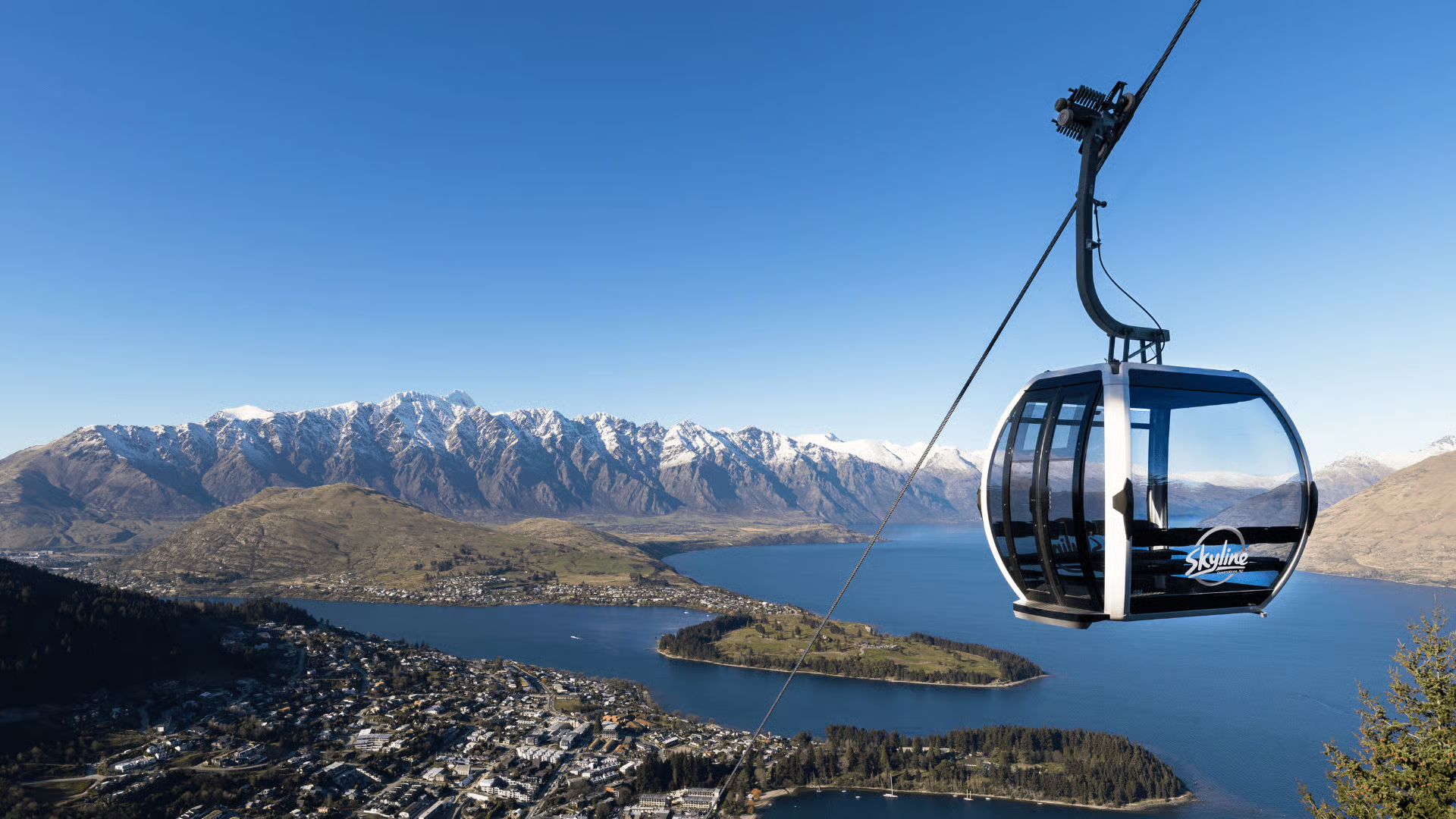
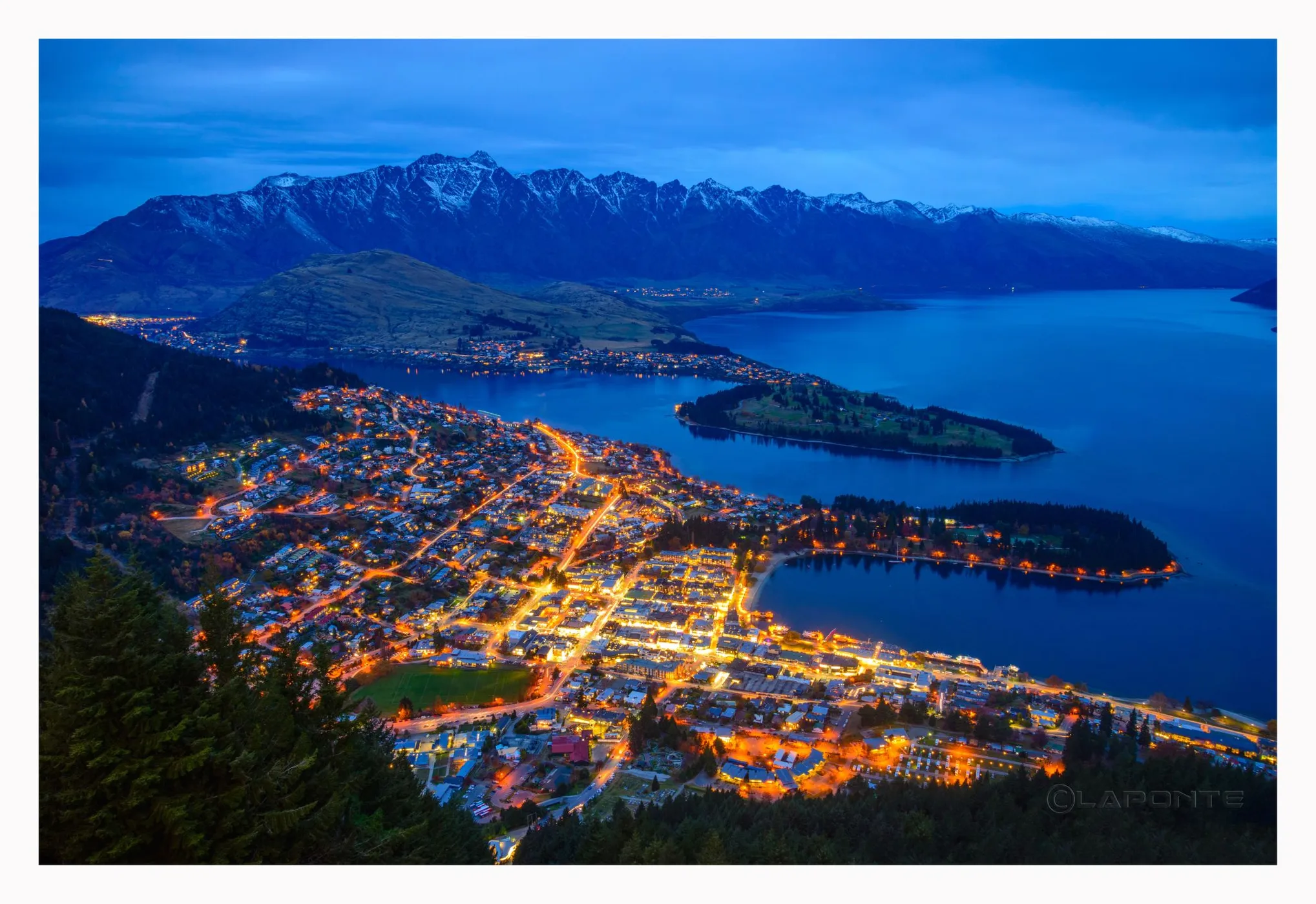
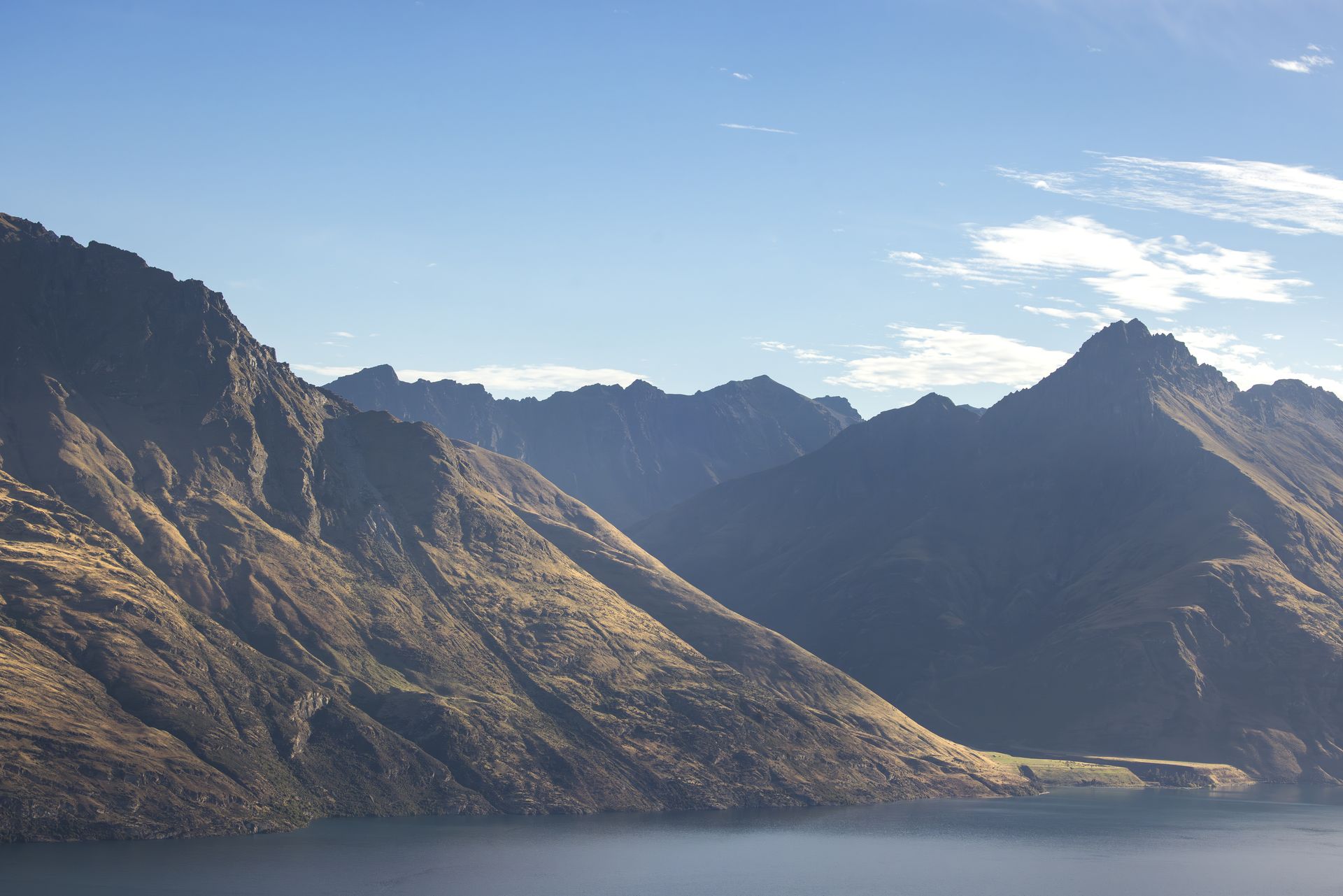
Queenstown, Lake Wakatipu and The Remarkables viewed from Skyline Queenstown
Summer light Until around 9:30 PM
Peak season Christmas to mid-February
Itinerary Six essential places
Stay Luxe tip Start early and book ahead

The single most underrated fact about a Queenstown summer is the light.

In late December, the sun is up before six and still catching the tops of The Remarkables at half past nine. You are not choosing between the drive and the dinner, or the lake and the vineyard. You have the hours for both.

For travellers who are time-poor for eleven months of the year, that is not a small thing. It is the whole argument for coming in the southern summer rather than the northern one.

The trade is people. Queenstown between Christmas and mid-February is the busiest it gets, and the difference between a good trip and a memorable one comes down entirely to where you point yourself. These are the six destinations we would build a summer itinerary around, and the reasoning behind each.

Back-country

1. Glenorchy, Paradise and the Dart Valley

Forty-five minutes north-west of Queenstown along the shore of Lake Wakatipu, on a road that has no business being as good as it is.

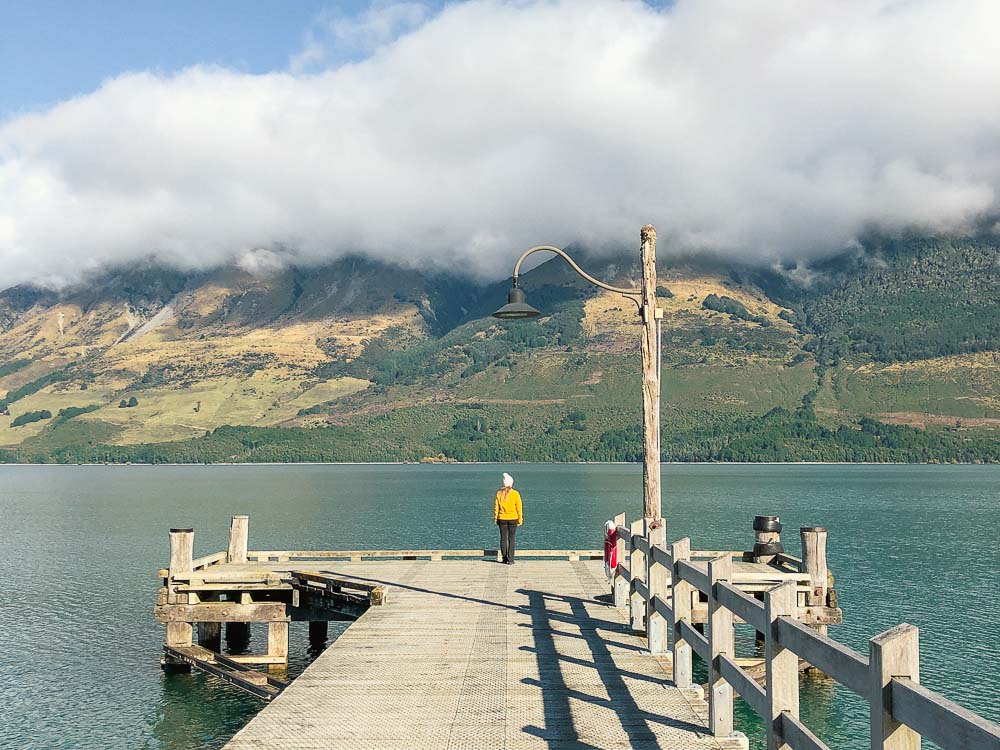
Glenorchy is where the valley stops being a resort town and starts being back-country. The lake road hugs the water the whole way, and beyond the village the gravel continues to Paradise—a place name that is, unusually, entirely literal—and on into the Rees and Dart valleys.

This is the landscape that has stood in for Middle-earth and a good deal of other invented country, and it holds up in person in a way film locations rarely do.

Summer is the season this opens up properly. The valleys are accessible, the braided river beds are exposed, and the jet-boat and horse-trekking operators run at full tilt. It is also the season the road is busiest, so go early. Leaving Queenstown at seven means having the first hour of the drive largely to yourself and being back for a late breakfast.

Above town
Queenstown and Lake Wakatipu viewed from Bob’s Peak

2. Bob’s Peak and the Tracks Above Town

The best view in Queenstown is four hundred and eighty vertical metres above the main street, and there are two entirely reasonable ways to reach it.

The Skyline Gondola has been running to the summit of Bob’s Peak since 1967 and is the steepest cable-car lift in the southern hemisphere. Five minutes, and you are looking at a 220-degree panorama taking in Coronet Peak, The Remarkables, Cecil and Walter Peaks and the town below.

It is the single most efficient thing you can do with half an hour in Queenstown, and it is genuinely worth doing on your first morning because it makes sense of the geography for everything that follows.

The other way is on foot. Ben Lomond is the serious option: six to eight hours return from town, or five to six if you take the gondola to the trailhead and start higher. It is an alpine day and should be treated as one, with proper footwear, weather layers and an early start.

Queenstown Hill, or Te Tapunui, is the more civilised proposition: three kilometres and a five-hundred-metre climb from Belfast Terrace, two to three hours return, and a view over the basin that most visitors never bother to earn.

For something gentler, the walks along the lake and into the creeks are the region’s quiet strength. Sunshine Bay is a level lakeside path through native bush, under an hour return, with a short side track to the eight-metre falls on Two Mile Creek.

The Mt Crichton Loop is ten minutes’ drive from town and follows a creek past waterfalls and through beech and mānuka forest, taking in Sam Summers Hut, built by a gold miner in the 1930s and still standing. Bob’s Cove is ninety minutes return through bush to water that is an implausible shade of blue, and the Moke Lake loop, fifteen minutes from town, is the one to save for a still evening.

On the water
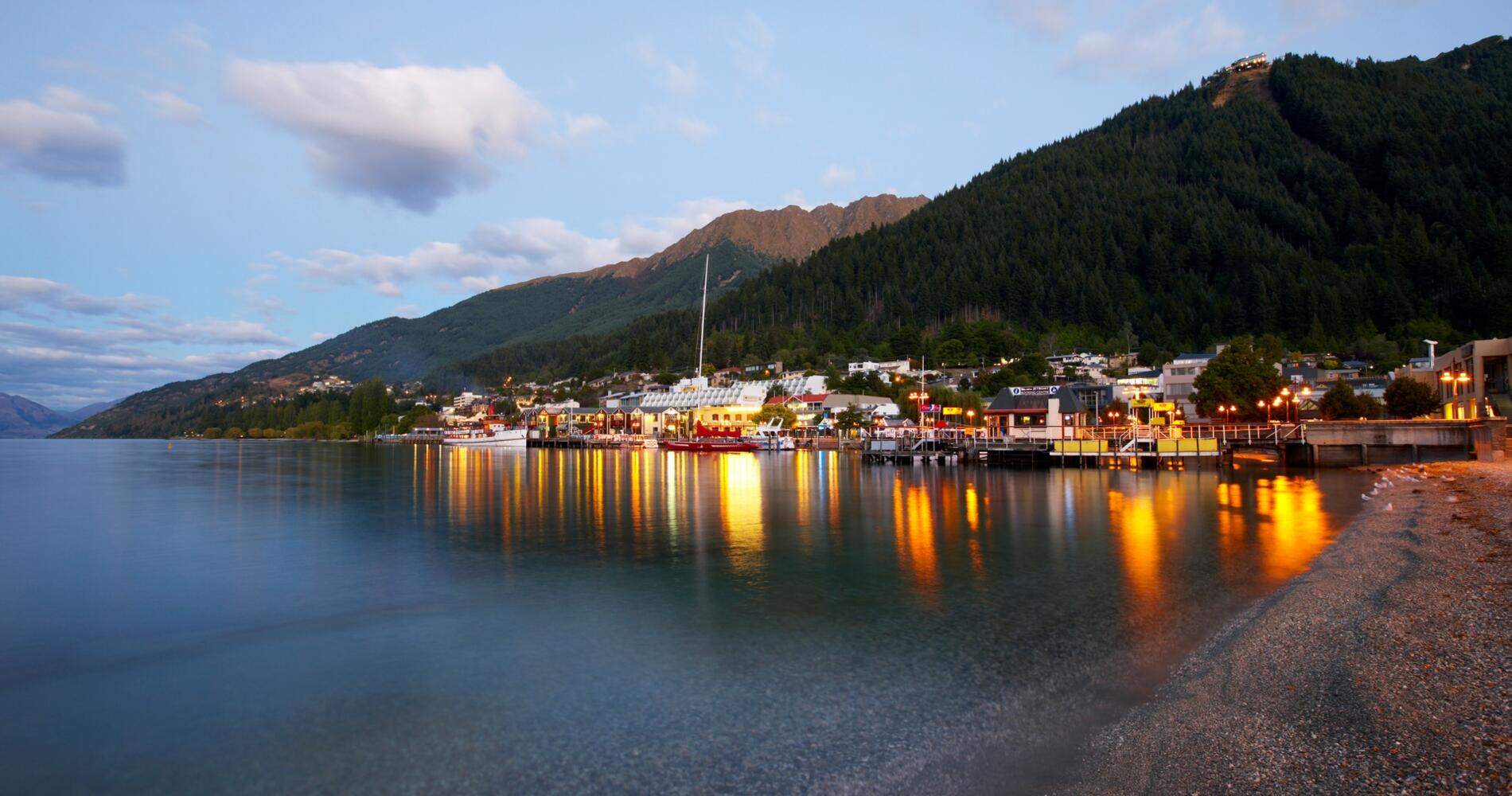
Lake Wakatipu surrounded by the mountains of Queenstown

3. Lake Wakatipu Itself

Most visitors look at the lake for a week and never actually get on it.

Lake Wakatipu is eighty kilometres long, glacially deep and, at the height of summer, still cold enough to be startling. The TSS Earnslaw, a coal-fired steamer that has been crossing this water since 1912, runs to Walter Peak on the far shore, and the crossing is one of the few genuinely unhurried hours available in a town built on adrenaline.

There are also private charters, which is the version we would recommend to anyone who values a quiet deck over a commentary.

The lake is also the reason the weather turns as fast as it does. Wakatipu generates its own conditions, and a flat morning is not a promise about the afternoon. Anyone heading out on the water or up a track should plan accordingly.

Wine country

4. Gibbston Valley at Harvest

Twenty-five minutes east through the Kawarau Gorge, and increasingly the reason some travellers come at all.

Central Otago is the southernmost wine region in the world, and Gibbston is its coolest, highest sub-region—a place where pinot noir is grown at the edge of what is agriculturally sensible, which is precisely why it tastes the way it does.

Late summer and early autumn bring the fruit in, and a cellar door in March has an energy that a cellar door in July simply does not.

The most rewarding way to do it is the least ambitious. Three producers, unhurried, with a driver. Six in a day is a tasting itinerary. Three is a wine experience.

The Central Otago region extends well beyond Gibbston to Bannockburn and the Cromwell Basin, and for anyone with a real interest, a full day heading east is time far better spent than a second day on the lake.

Ride and walk

5. Arrowtown and the Trails That Lead There

Twenty minutes from Queenstown by road, and rather more rewardingly, about two hours by bike.

The Queenstown Trail is a 130-kilometre network of largely off-road, mostly grade-two riding that connects Queenstown, Lake Hayes, Arrowtown and Gibbston. It is the rare piece of infrastructure that changes how a place is experienced.

The Arrow River Bridges Trail runs 13.7 kilometres from Arrowtown to Gibbston across five bridges, including a historic suspension crossing of the Kawarau, and joins the nine-kilometre Gibbston River Trail through the vines past Peregrine, Gibbston Valley and Mt Rosa.

Which means you can ride from a gold-rush village to a cellar door, have lunch and be collected. The eight-kilometre Lake Hayes loop is the shorter, flatter option, with The Remarkables laid out across the water the entire way.

On foot, Arrowtown is just as well served. The Arrow River Trail follows the water out of the village on an easy, undulating path. The Sawpit Gully loop is seven kilometres and two to three hours, climbing high above the river through old gold workings, and is best walked anticlockwise. Tobins Track is the steady climb out of town for a view back over the whole basin.

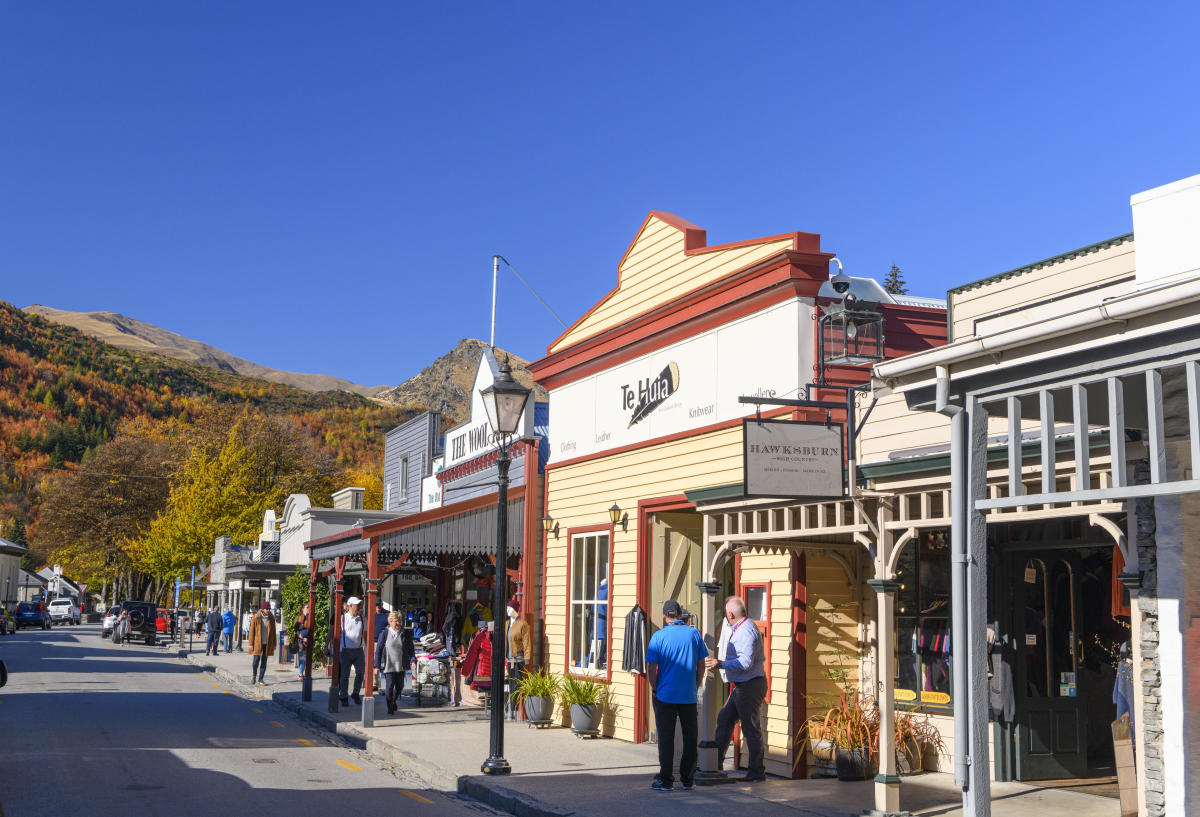
The village itself is small enough to walk end to end in twenty minutes and interesting enough that you will not. Buckingham Street runs on independent boutiques, galleries, jewellers working with local gold and a scattering of long-standing family businesses rather than the chains found elsewhere.

The coffee is roasted on the street it is served on. The restaurants punch a long way above a village of this size, from Spanish tapas to northern Italian to a garden café in a restored cottage, and there is a confectionery shop that has been quietly undoing people’s willpower since 2004. Our Queenstown dining guide covers all of it properly.

One practical note: Central Otago is a dry inland climate with very high UV and almost no shade on the trails. Start early, carry more water than feels necessary and take the sun seriously.

Allow half a day. Most people allow an hour and regret it.

Fiordland

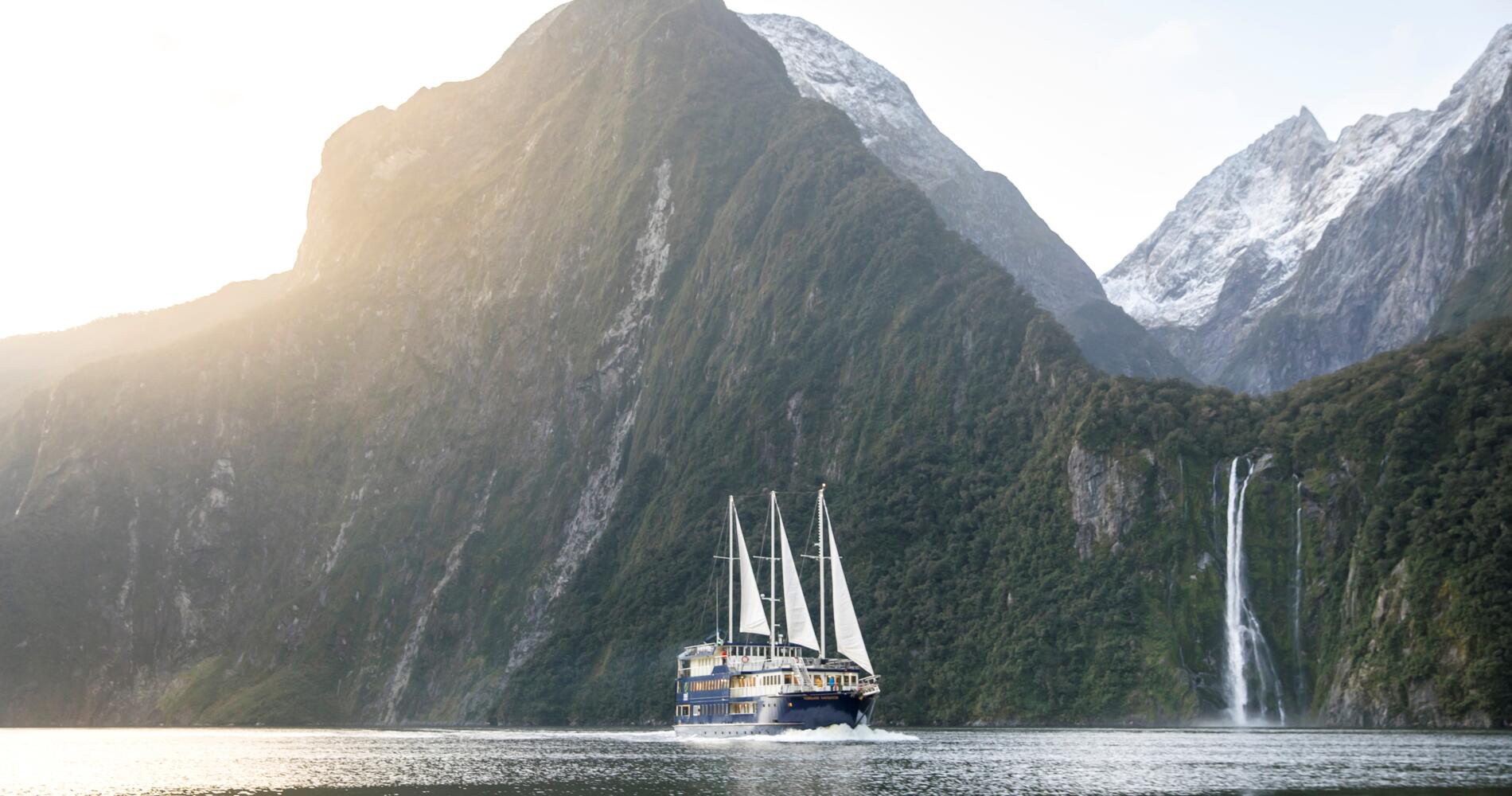
6. Milford Sound and Fiordland

The question is not whether to go. It is how.

By road, Milford Sound is roughly three and a half to four hours each way from Queenstown—a twelve-hour day, most of it in a vehicle, on one of the most beautiful drives in New Zealand. Done well, with an early start and a driver who knows where to stop, it is a legitimately great day. Done as a coach transfer in peak season, it is a long one.

By air, it is a different proposition entirely: around forty minutes each way over the Southern Alps, often with a landing at the sound and a cruise before returning. It converts a full day into a half day and gives you the view that the road cannot.

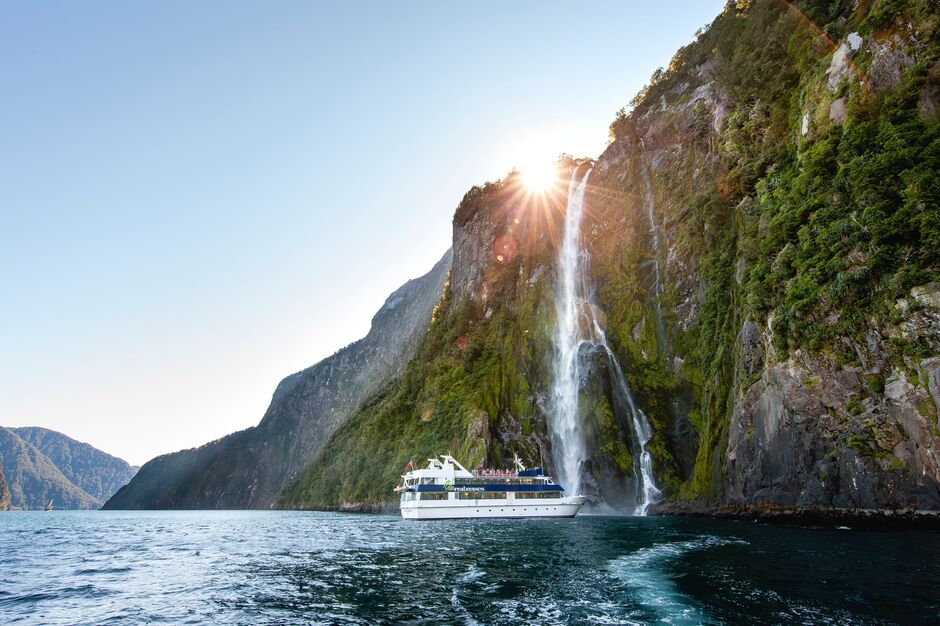
One expectation to set: Fiordland is one of the wettest inhabited places on earth, and rain is not the exception. It is what makes the walls run with waterfalls. The travellers who come away most impressed are frequently the ones who went on the wrong-looking day.

Plan early

One Thing to Take From This

Summer in Queenstown gives you more hours and more company in equal measure.

The travellers who get the most from it are not the ones who fit the most in. They are the ones who choose fewer things, start earlier and stay somewhere that makes the end of the day as good as the middle of it.

In a valley this small, that last part is the constraint. The properties worth having are a finite set, and the summer window is committed a long way out.

If a southern summer is on your horizon, it is worth starting the conversation early.

Summer in Queenstown gives you more hours and more company in equal measure.

Plan your Queenstown summer with Stay Luxe

Choose the right stay before the long days arrive

The best Queenstown summer properties are a small and sought-after set. Secure the right base early, then build the lake, mountains, wine country, historic villages and Fiordland around it.

Explore Queenstown stays

By Stay Luxe
Where to eat in queenstown five tables worth planning around

Stay Luxe Journal · Dining Guides

Where to Eat in Queenstown: Five Tables Worth Planning Around

From New Zealand’s only two-star restaurant to a century-old homestead and a cult burger counter, Queenstown rewards those who book thoughtfully.

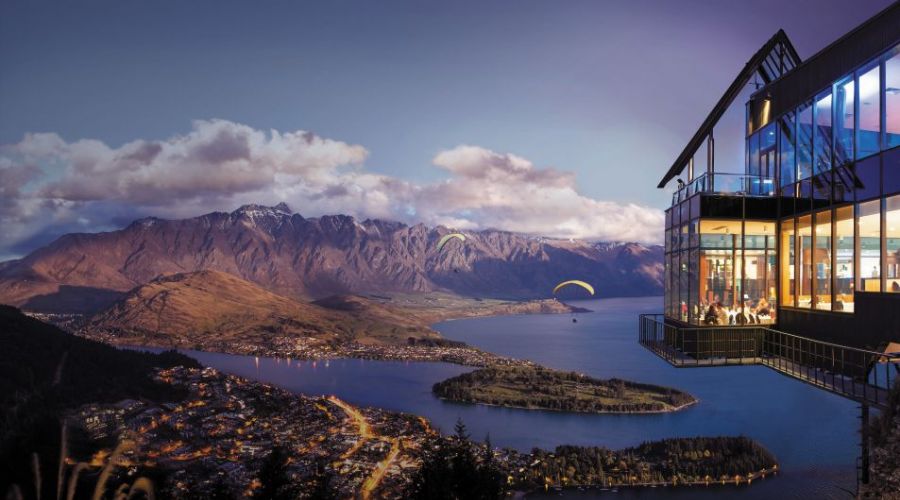
Skyline Gondola ride and buffet dinner overlooking Queenstown
MICHELIN debut June 2026
New Zealand first One two-star restaurant
Dining guide Five places to plan around
Stay Luxe tip Reserve before you fly

In June 2026, the MICHELIN Guide arrived in New Zealand for the first time.

It was the guide’s debut anywhere in Oceania, covering Auckland, Wellington, Christchurch and Queenstown. When the results were read out, the largest single moment belonged to the smallest place on the list. New Zealand’s only two-star restaurant is not in Auckland. It is here, above Lake Wakatipu.

That confirms something regular visitors have known for years. Queenstown is not a resort town with some restaurants attached. It is one of the more serious eating destinations in the southern hemisphere, and it is dense. You can move between a two-star tasting menu, a century-old homestead serving refined Chinese food and a cult burger counter without ever leaving the basin.

Two stars

1. Essence, Two MICHELIN Stars

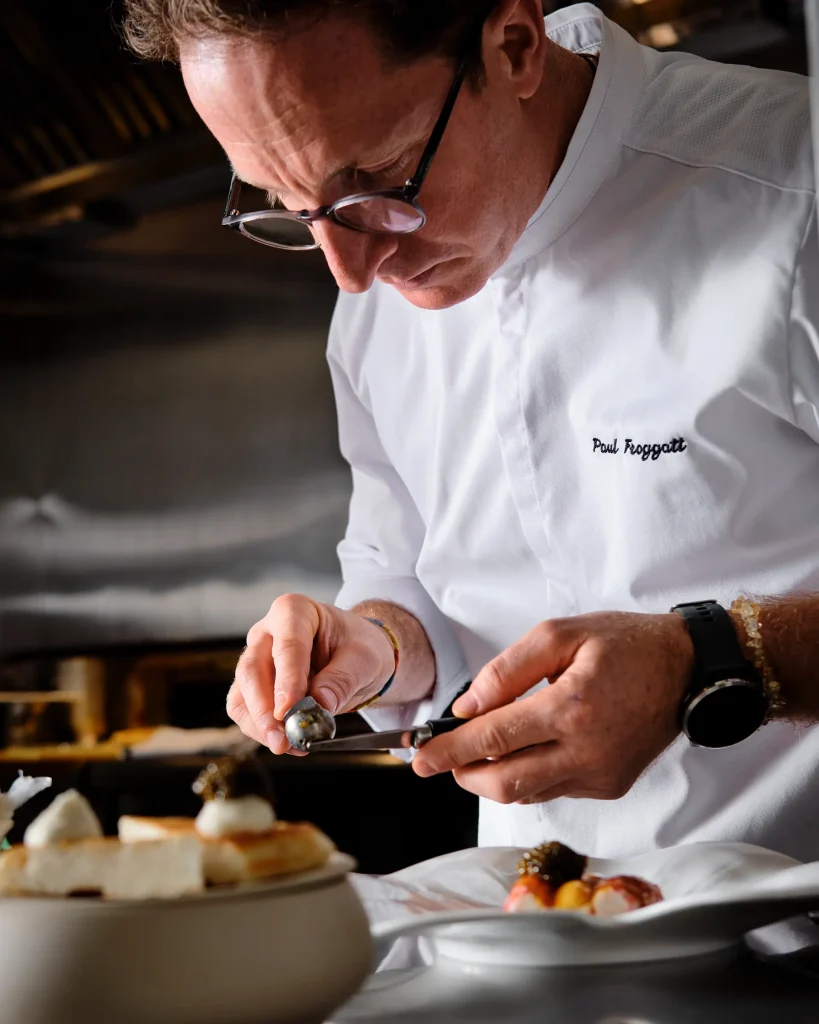
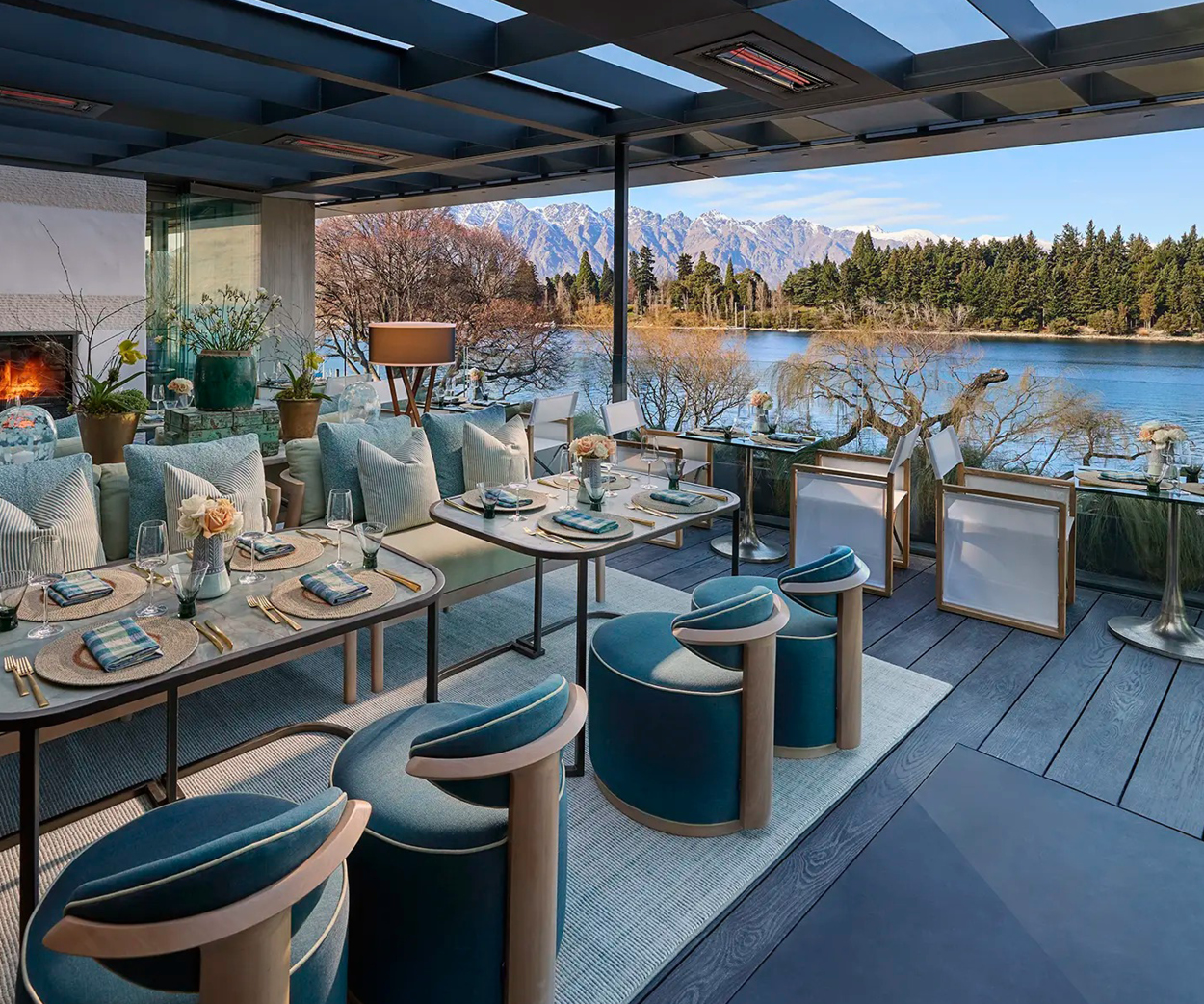
Essence sits on the hillside above Lake Wakatipu, within the Roki Collection, and holds two MICHELIN stars. It is the only restaurant in New Zealand to do so.

Executive chef Paul Froggatt works across two tasting menus built on premium seasonal New Zealand produce, and the dining room has been deliberately kept quiet and unshowy so that nothing competes with what is on the plate. The wine list is strong and, unsurprisingly, deep in pinot noir.

Globally, fewer than six hundred restaurants hold two stars. This is the one in New Zealand. Book it the moment your dates are confirmed, not the week before you fly.

One star

2. Amisfield, One MICHELIN Star

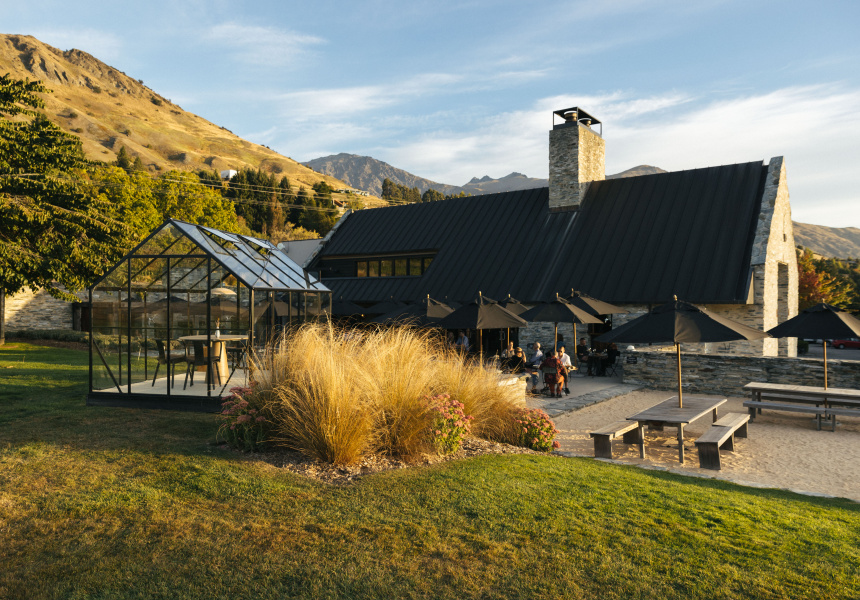
Twenty minutes from central Queenstown at Lake Hayes, Amisfield has been the region’s benchmark for well over a decade and holds one MICHELIN star in the inaugural New Zealand guide.

The format is a dinner tasting menu shaped by what is local, seasonal, wild and endemic—foraged, hunted and grown within Central Otago wherever possible—paired with wine from the estate.

The stone building sits low against the vines, with Lake Hayes in front and the ranges behind. The setting does a great deal of work before anything reaches the table.

Full afternoon

3. Ayrburn, an Entire Precinct Rather Than a Restaurant

If you only make one dining decision in the region, make it a full afternoon and evening at Ayrburn.

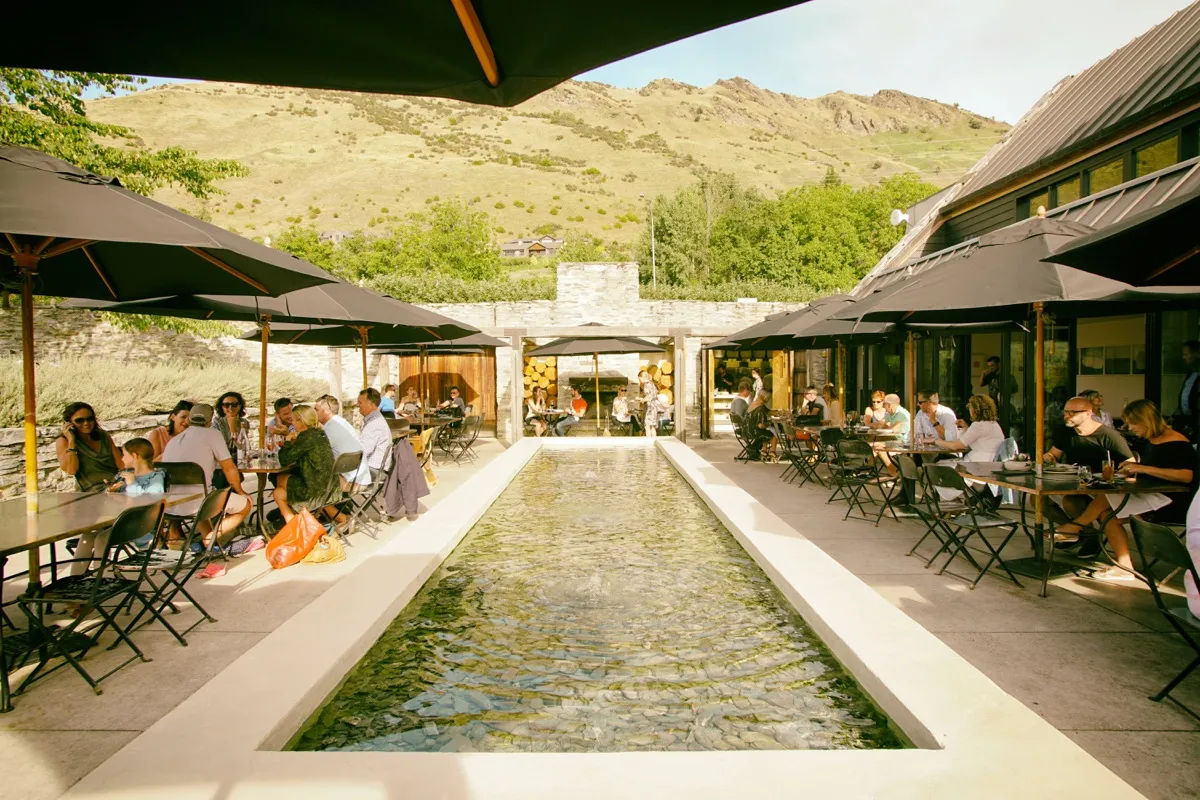
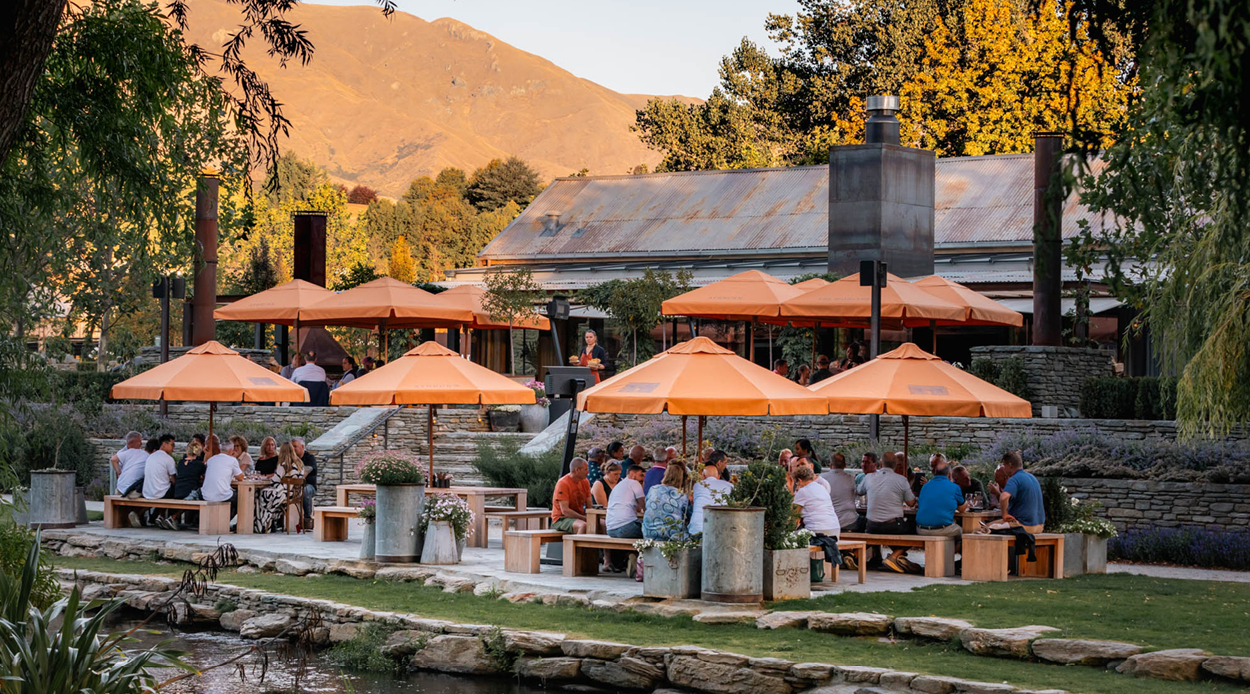
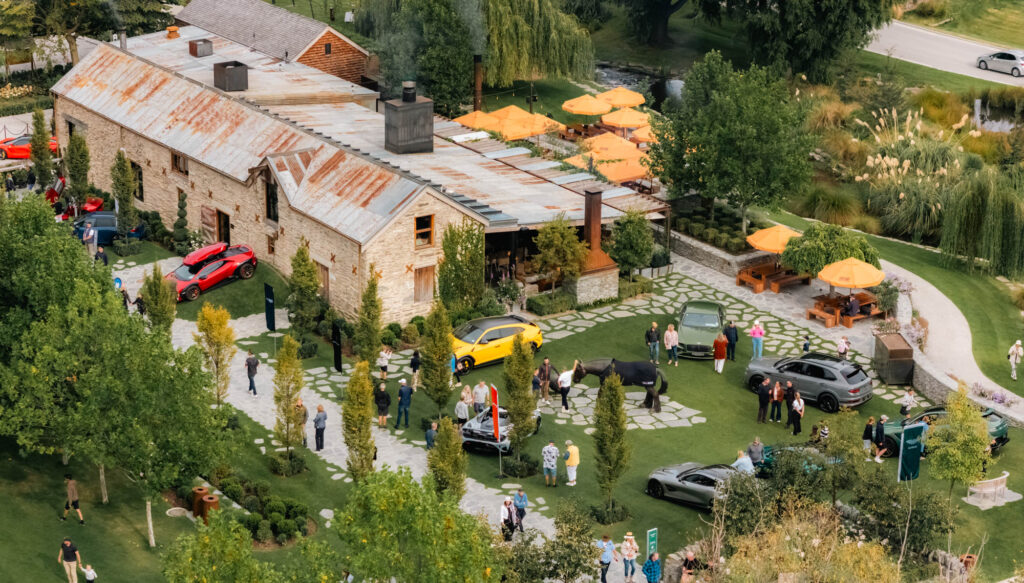
Ayrburn sits on 160-year-old farmland between Queenstown and Arrowtown, and it is the most ambitious hospitality project the region has seen. The original farm buildings have been restored and converted into a cluster of distinct venues arranged around The Dell, a natural amphitheatre of lawn and mature trees.

Book a table, and book it well ahead, because the best rooms here go early. Then treat that booking as the anchor of the evening rather than the whole of it. The pleasure of Ayrburn is in choosing a route through the property.

The Woolshed

The anchor is an elegant bistro in the original wool shed, with fireside tables inside, seating beside Mill Creek and a menu built on well-executed classics and grilled meats. The lamb is the order.

Billy’s

Billy’s occupies the original century-old Paterson family homestead and serves creative, refined Chinese food. A glazed conservatory makes it a year-round proposition beneath the Otago sky. It is the most surprising room on the property and, for many, the best.

The Manure Room

A name inherited rather than invented, this is the shared-plates and cocktail room, with mountain views and considerably more atmosphere than the name suggests.

The Bars, Bakery and Dairy

The Burr Bar handles cocktails properly. The Barrel Room sits among fifty-six ageing wine barrels with a grand piano at its centre and runs Ayrburn wine tastings daily. The Dairy is the ice creamery, and The Bakehouse is the all-day café and bakery.

Both The Woolshed and Billy’s appear in the inaugural MICHELIN Guide New Zealand. That is rare for two venues on the same property, and a fair indication that the scale here has not come at the cost of the cooking.

Check the events calendar before settling your dates, because at Ayrburn the programme is frequently the reason to come rather than a bonus once you are there. In July, The Dell becomes a Mid-Winter Christmas wonderland of light installations and an outdoor ice rink, with mulled wine for those who would rather watch than skate.

Summer brings live music on the lawn, and in February the Ayrburn Classic fills the grounds with two hundred and fifty classic cars across a weekend that closes with a gala dinner. The programme shifts each season, so it is worth checking once your dates are firm.

Go in the late afternoon. Start with a tasting, move to a bar, finish at a table.

Queenstown icon

4. Fergburger

Every serious eating city has one place that resists all of this, and in Queenstown it is a burger counter on Shotover Street.

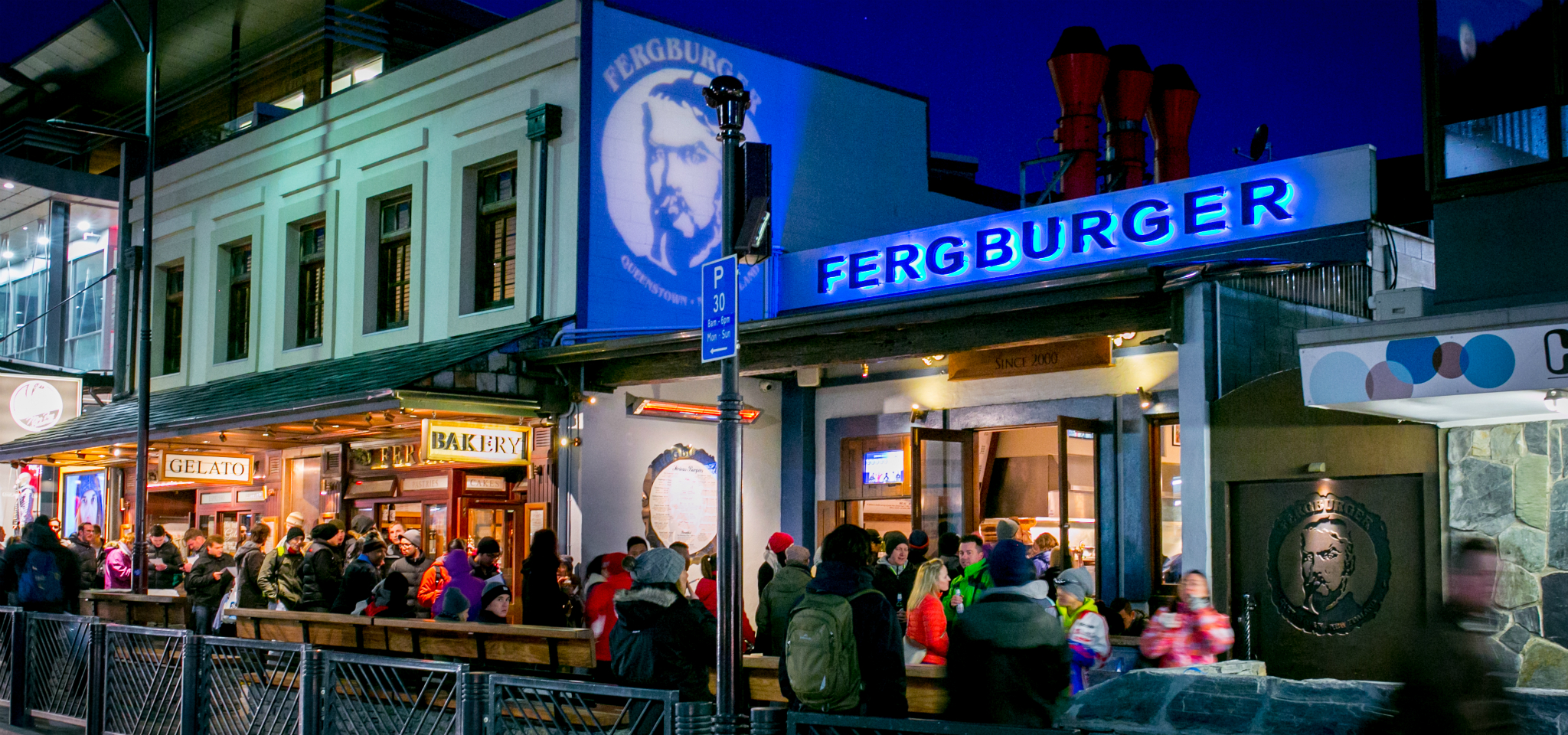
Fergburger has been at 42 Shotover Street since 2001, opens early and closes very late, and the queue is a permanent feature of the streetscape. The reasonable assumption is that it is a tourist ritual that has outrun its cooking. The reasonable assumption is wrong.

The burgers are large, properly made and consistently good. The Codfather, the Cockadoodle Oink and Little Lamby are the names people come back for.

The queue moves faster than it looks because the counter is drilled. Go at an odd hour, mid-afternoon or late, and it is a ten-minute proposition.

There is no version of a Queenstown food trip that should skip it, and no version where it belongs on the same evening as a tasting menu. Give it its own slot.

Village dining

5. Arrowtown, the Twenty-Minute Drive Worth Making

Arrowtown is a gold-rush village of original 1860s cottages twenty minutes from Queenstown, and it eats far above its size.

Coffee First

Wolf Coffee Roasters at 44 Buckingham Street has been roasting on site since 2015, on a refurbished 1950s Probat that sits in the room. Single origins, rotating blends and fresh doughnuts. It is the best coffee in the district and, for a certain kind of traveller, reason enough to drive out.

Then Dinner

La Rumbla is the Spanish tapas room on Buckingham Street and one of only a handful of restaurants in New Zealand formally recognised by the Spanish government as an official restaurant of Spain. Aosta does northern Italian cooking with genuine conviction. Provisions of Arrowtown is the long-standing garden café in a restored cottage, and the sticky buns are a local institution.

On the Way Out

The Remarkable Sweet Shop offers floor-to-ceiling confectionery, house-made fudge and nougat, free tastings, and a reliably strong argument with whoever you brought about how much is too much. It has been on Buckingham Street since 2004. It is not sophisticated. It is completely wonderful, and it is the thing people talk about afterwards.

Plan the sequence

One Thing to Take From This

The MICHELIN Guide did not change Queenstown’s food. It made it legible to people who had not been paying attention.

What the guide cannot tell you is the sequencing: which room suits which night, which drive is worth making before dinner and which table is worth rearranging a trip around.

That is what the people who live here know, and it is the difference between eating well in Queenstown and eating brilliantly.

If you are planning a trip and want the tables booked before the accommodation is even confirmed—which is increasingly the right order—start the conversation early.

The MICHELIN Guide did not change Queenstown’s food. It made it legible to people who had not been paying attention.

Plan your Queenstown stay with Stay Luxe

Book the right table, then choose the right place to stay

Queenstown’s most memorable dining experiences reward early planning. Secure the essential reservations and a considered place to stay, then let the sequence of the trip fall into place around them.

Explore Queenstown stays

By Stay Luxe
A Matakana Day Trip from Auckland: Where to Eat and Shop in the Village

Stay Luxe Journal · Day Trips
A Matakana Day Trip from Auckland: Where to Eat and Shop in the Village

An Hour North, a World Slower

A relaxed day trip to Matakana from Auckland
From Auckland About 45 minutes
Market morning Saturday, 8 am–1 pm
Best for Food, shops and wine
Time needed One unhurried day

Matakana is easily accessible within a 45-minute drive of the Harbour Bridge: close enough that no one needs to pack a bag, yet far enough that the shoulders drop somewhere around Pūhoi. What waits at the end is a wine-country village that has quietly become one of the best small food and shopping destinations in the country.

Saturday morning

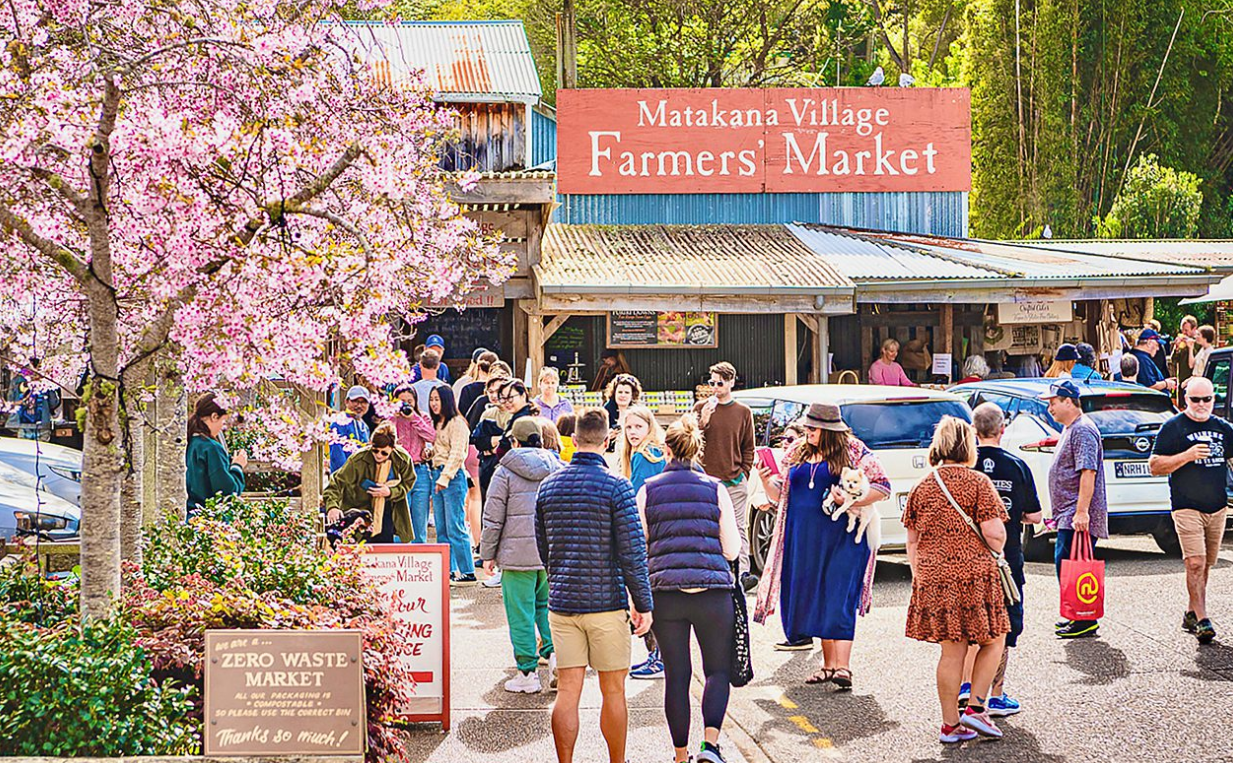
Start at the Matakana Village Farmers’ Market on Saturday

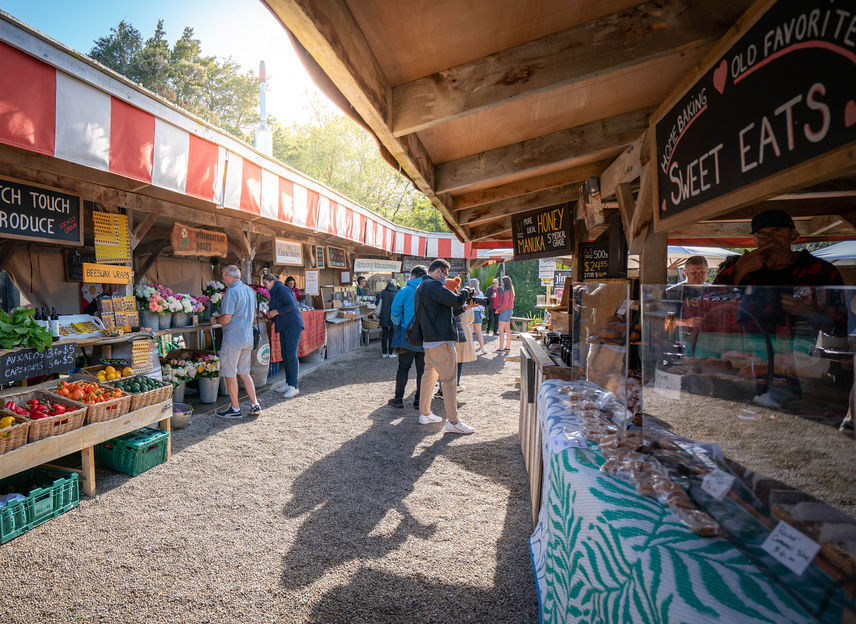
If you can choose your day, choose Saturday. The Matakana Village Farmers’ Market runs every Saturday morning from 8 am to 1 pm, rain or shine, on the riverside in the middle of the village, and it is the reason half of Auckland seems to migrate north on a fine weekend.

This is a proper growers’ and makers’ market rather than a craft fair: fresh produce, artisan breads, deli counters, flowers, small-batch sweets and seriously good coffee, with live music drifting over the river and a zero-waste philosophy that asks only that you bring a basket. Arrive early, eat breakfast from the stalls and let the morning set the pace for the rest of the day. In summer, leave Auckland a little earlier; Matakana is a popular weekend destination.

Village shopping

The Best Shops in Matakana Village

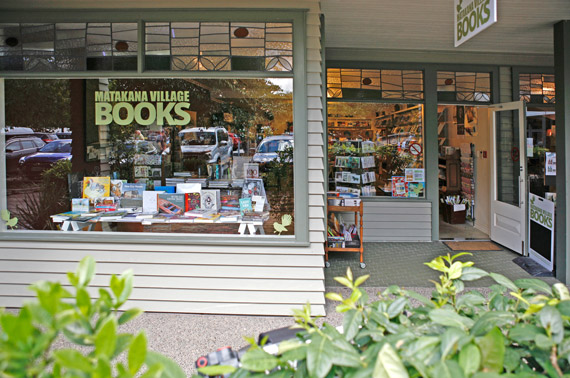
The village shops are few enough to see in an afternoon and good enough to justify the drive on their own. Start at Matakana Village Books, the kind of small, sharply chosen independent bookshop that cities keep losing and villages seem to keep. Ask for a recommendation; leave with three.

For clothing, The Bach blends surf heritage with a considered edit of New Zealand-designed labels, a wardrobe for exactly the life this coastline suggests. A few doors away, Elle & Riley deals in timeless pieces of A-grade cashmere, designed in New Zealand and made to be worn for decades rather than seasons. It is the sort of purchase that outlasts the memory of what it cost.

Then come the edible souvenirs. Honest Chocolat makes some of New Zealand’s finest chocolate right here in the village, and its tasting counter has ended many good intentions. Stop for a coffee at Ringawera Baker, then take a croissant or freshly baked loaf home with you.

Relaxed lunch

Where to Eat in Matakana: The Village Pub

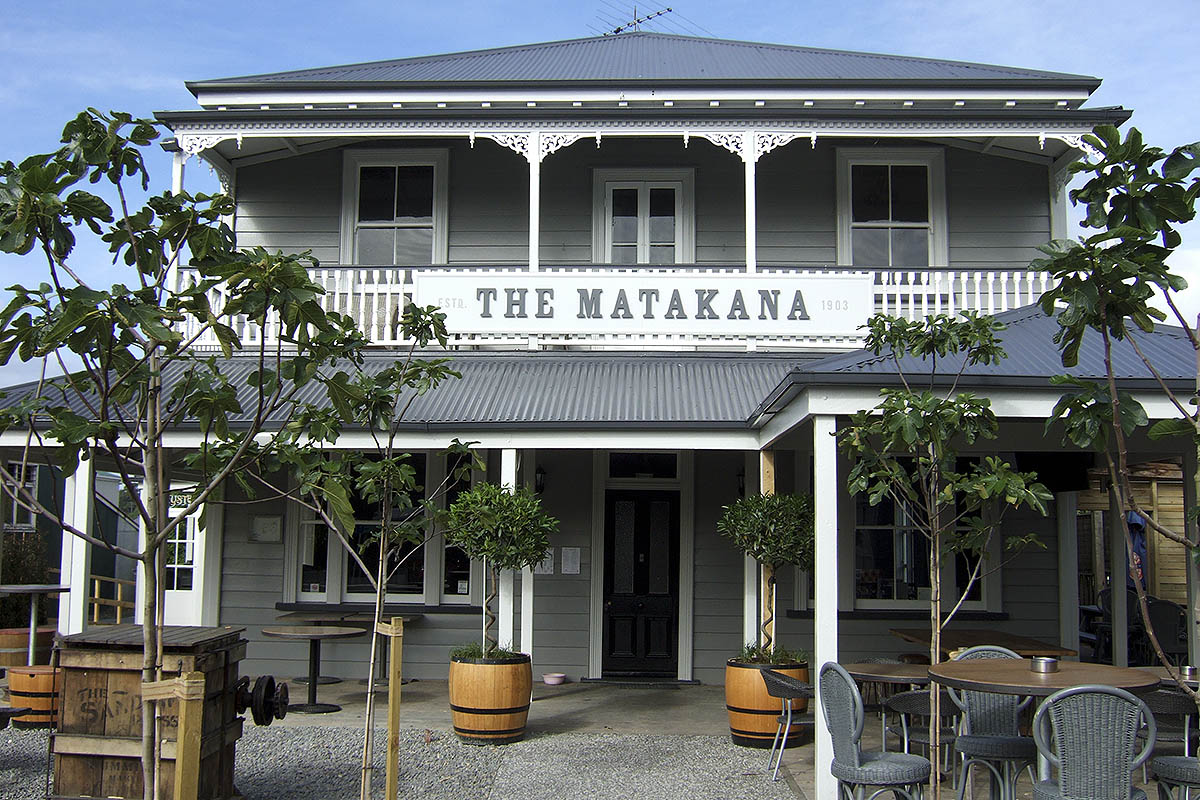
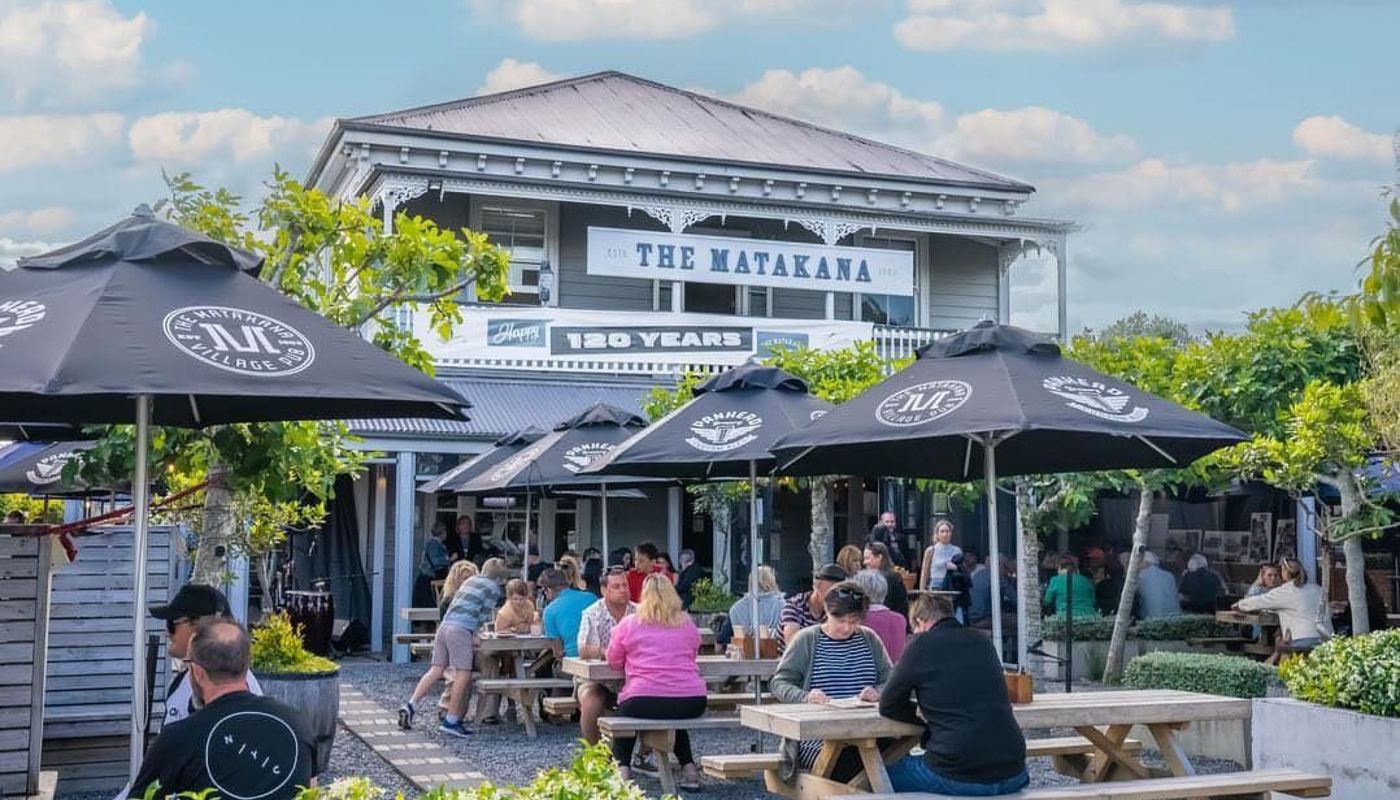
For a relaxed lunch, try The Matakana Village Pub. It earns the word institution: a true village pub with a garden made for long afternoons, and fish and chips that regulars will tell you are the best they have ever had. They have a case.

The fish comes from Leigh Fisheries, twelve kilometres up the road and famous for its line-caught catch, so what lands on your plate in crisp batter was swimming in these waters remarkably recently. Add a cold glass of something local, and the day has peaked early.

Family favourite
Handmade gelato at Charlie's Gelato in Matakana

Charlie’s Gelato: A Matakana Institution for the Whole Family

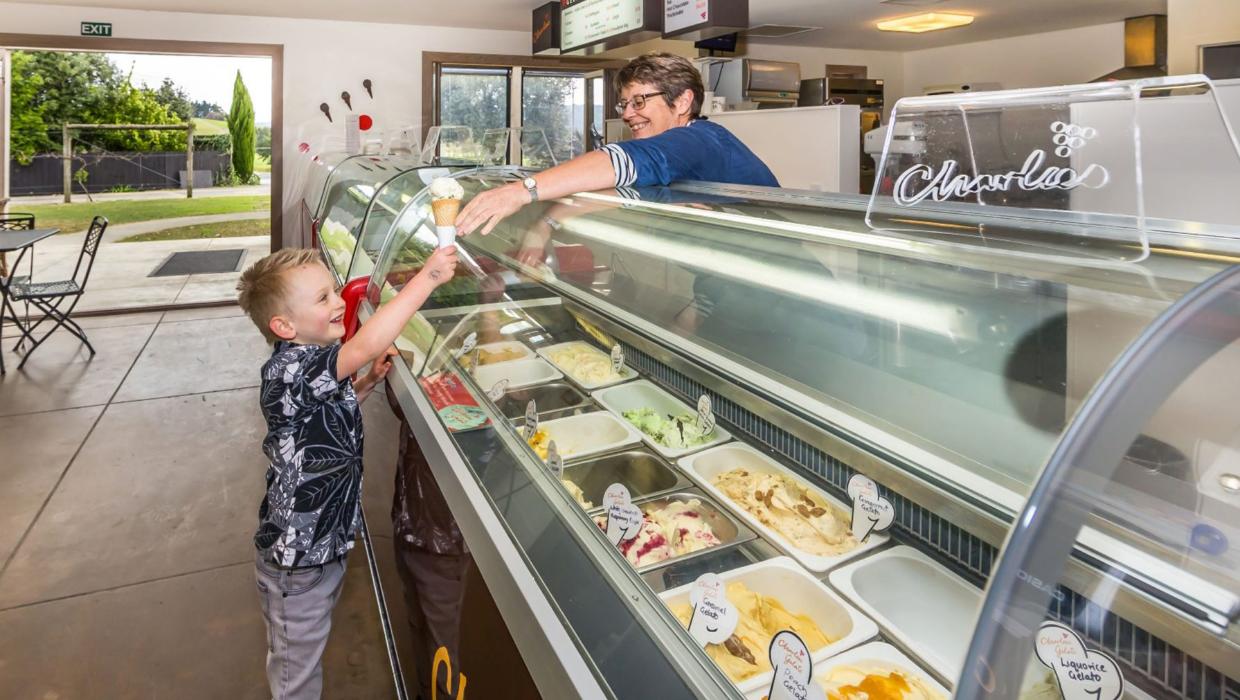
You do not need to venture far to find something for the entire family. Charlie’s Gelato, a short drive from the village, makes its gelato and sorbetto by hand in Matakana, much of it from fruit grown spray-free on the property itself. The judges agree with the queue: two gold medals at the Outstanding NZ Food Producer Awards, one for the lemon gelato and one for the feijoa sorbetto. Order the lemon and stand in the sun. Few afternoons in wine country end better.

Local vineyards

Matakana Wine Country: A Region Built on Boutique Vineyards

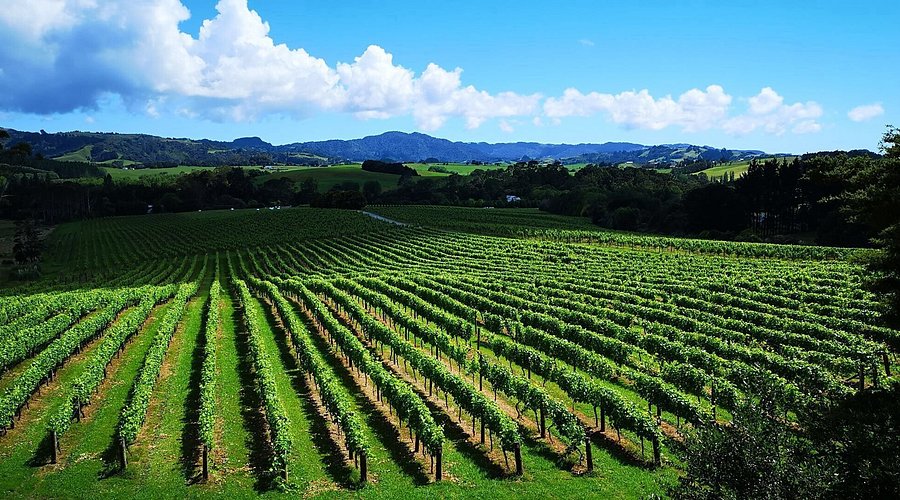
And then there is the wine, because Matakana is, at heart, wine country. The hills around the village hold more than twenty boutique vineyards, small, family-scale producers making handcrafted wines that rarely travel far beyond the region. Matakana Estate, Nola Vineyards, Omaha Bay Vineyard and Omaha Hills are among the names worth knowing, and the cellar doors between them turn a casual afternoon into a self-guided wine trail.

The vineyards deserve more than a passing mention, and they will get it: a full guide to Matakana’s wine country is coming in a future post. For now, know that the glass of local red at the end of your lunch was probably grown within sight of your table.

Destination dining
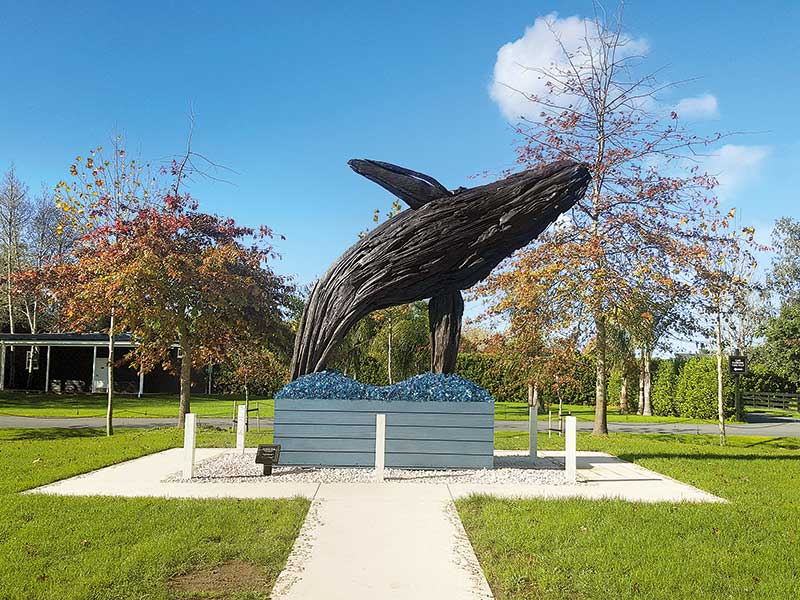
The Humpback Whale sculpture by New Zealand artist Jack Marsden-Mayer at Sculptureum

Rothko at Sculptureum: Matakana’s Destination Dining

When the occasion calls for more, book Rothko. Set among the gardens of Sculptureum, where several hundred artworks are scattered across ten acres of galleries and grounds, it is that rare restaurant where the setting and the plate hold each other’s standard.

The kitchen’s shared-plates menu is bold, technically serious and quietly playful, and the wider world has noticed: a One Hat award and a Best Destination Restaurant title both arrived in 2025. It trades on none of it. Lunch here, with a slow walk through the sculpture gardens on either side, turns a day trip into something closer to an occasion. Book ahead; the room is small and the reputation is not.

Leave after breakfast, return before dark, one basket heavier and considerably better fed.

Make a day of Matakana with Stay Luxe
Base yourself well and explore the coast

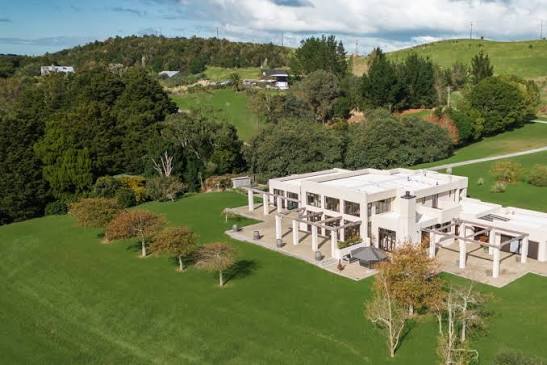
A waterfront residence or private retreat from the Stay Luxe collection makes the returning as pleasant as the setting out. And if one day starts to feel too few, you are not alone. Where to stay when Matakana refuses to let you leave is a story for the next guide.
Explore Auckland properties

By Stay Luxe
Five Places That Make a Queenstown Winter Worth Clearing the Diary For

Stay Luxe Journal · Winter Guides
Queenstown Winter Guide: Five Places Worth Building a Trip Around

Snow-covered mountains, historic villages, pinot noir country and Fiordland from the air—the Queenstown regular visitors quietly prefer.

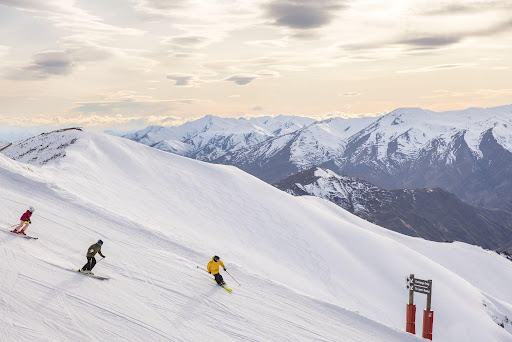
Snow-covered slopes at Coronet Peak near Queenstown
From Australia About three hours direct
Winter season June to September
Itinerary Five essential places
Stay Luxe tip Book accommodation first
Australians will fly the better part of a day to Japan for snow. Queenstown is three hours away, direct, with no visa and nothing you could reasonably call jet lag.

For those arriving from further afield, it is a longer journey and a rarer one: an alpine winter running at full tilt while the northern hemisphere sits in high summer.

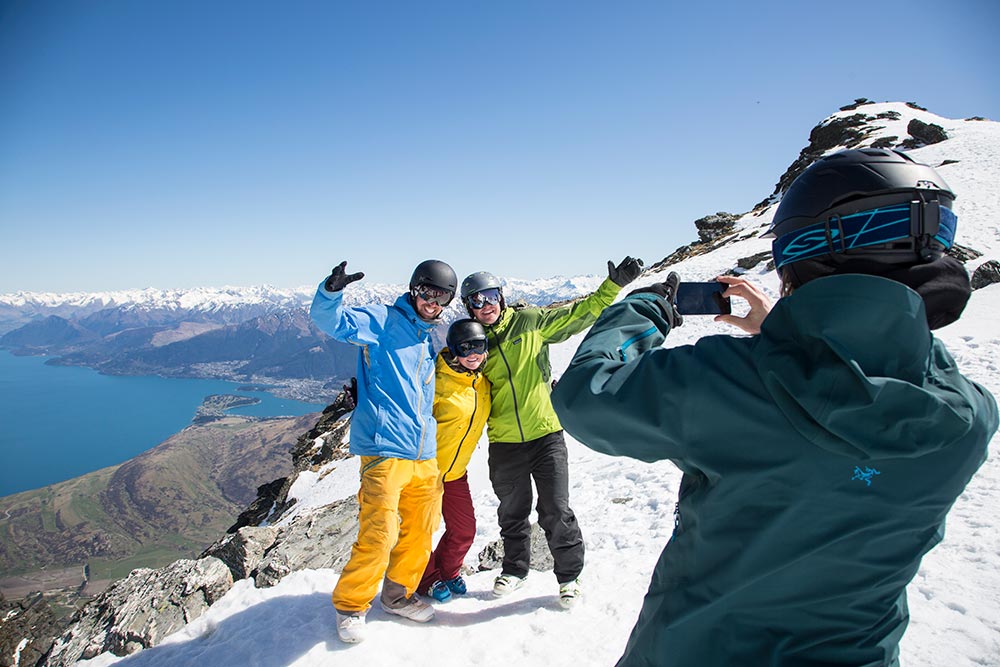
However you arrive, what you arrive into is a more deliberate Queenstown than the one most people picture. Between June and September, the valley narrows its offering, the lake stills, the light goes long and low, and the road to Glenorchy empties by mid-afternoon. What remains is the version of this place that regular visitors quietly prefer. Fewer options. Better ones.

On the snow
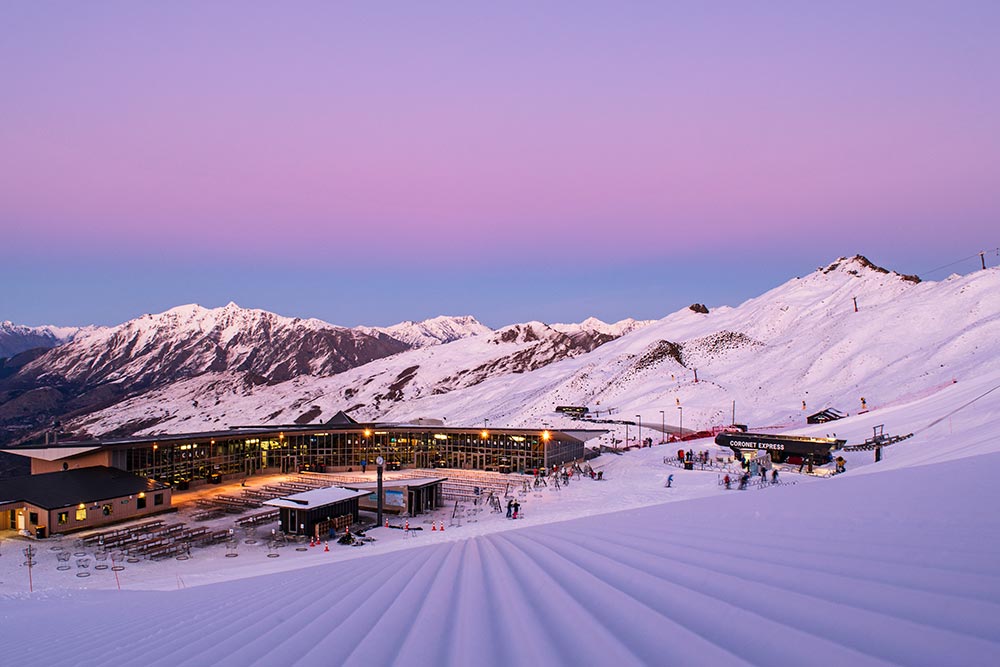
The Remarkables ski field overlooking the Queenstown basin

Coronet Peak and The Remarkables

Queenstown is one of very few places on earth where you can ski above a lake, at altitude, and be back at a table with a wine list by seven.

The two fields closest to town could not be less alike. Coronet Peak is the older of the two, roughly twenty-five minutes from the centre, and the only field in the region with regular night skiing—a genuine novelty, and the reason a Friday evening on the mountain feels unlike a Friday evening anywhere else.

The Remarkables sits higher and holds its snow later, with wider, more forgiving terrain and the kind of view down the Wakatipu Basin that stops conversation on the chairlift.

The lifts typically open in June and run into early October, but the reliable weeks—the ones that reward a flight—sit from mid-July through late September. Book accommodation before you book flights, not after. In a valley with this little land, the best properties are committed well ahead of the snow.

If you have the days, the two Wānaka fields, Cardrona and Treble Cone, are within reach and worth the drive over the Crown Range for the change of aspect alone.

Gold country

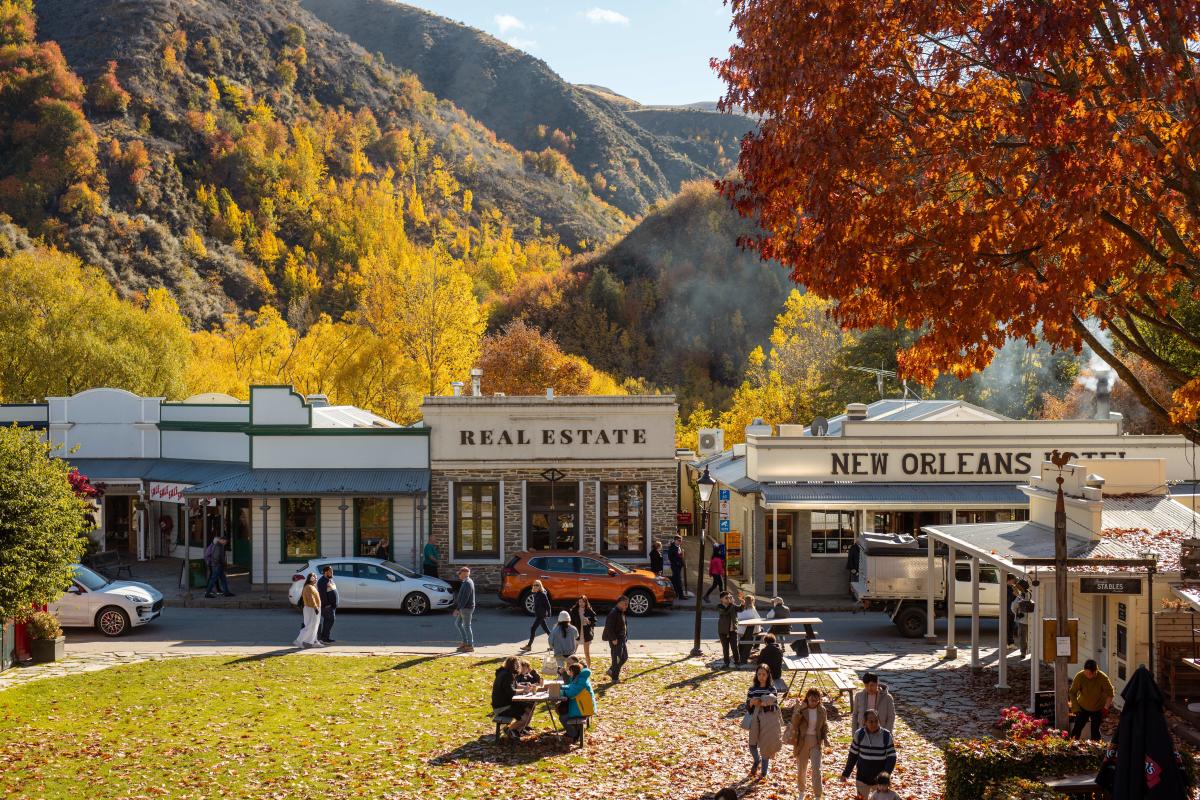
Arrowtown

Twenty minutes from Queenstown, and a different century.

Arrowtown was built on gold in the 1860s, and unlike most towns of its vintage, it was never rebuilt over. The miners’ cottages on Buckingham Street are the originals. So is the Chinese settlement on the edge of the village, restored and left deliberately unglossed—a sobering, quietly moving record of the men who came for the goldfields and were made to live apart from the town they worked beside.

In winter, the village does something it cannot manage in autumn, when the poplars pull crowds from across the country: it goes quiet. Snow on the Crown Range behind, woodsmoke in the street and a handful of very good rooms to sit in.

It is small enough to walk end to end in twenty minutes and interesting enough that you will not. Buckingham Street runs on independent boutiques, galleries, jewellers working with local gold and a scattering of long-standing family businesses rather than the chains found elsewhere.

The coffee is roasted on the street it is served on and is a genuine reason to make the drive by itself. The restaurants punch a long way above a village of this size, from Spanish tapas to northern Italian to a garden café in a restored cottage. There is also a confectionery shop that has been quietly undoing people’s willpower since 2004. Our Queenstown dining guide covers all of it properly.

One practical note: Arrowtown sits inland in a valley that holds the cold, and mornings here are frequently still frosty long after the Queenstown lakefront has thawed. Take an extra layer and wear something you can walk in.

Allow half a day. Most people allow an hour and regret it.

Head of the lake

Glenorchy and the Head of the Lake

Forty-five minutes from Queenstown along the western shore of Lake Wakatipu, on what is credibly one of the finest short drives in the country.

The road is the destination as much as Glenorchy is. It runs tight to the water, with the Bayonet Peaks above and the lake dropping away below, and there are enough places to stop that the drive routinely takes twice as long as it should.

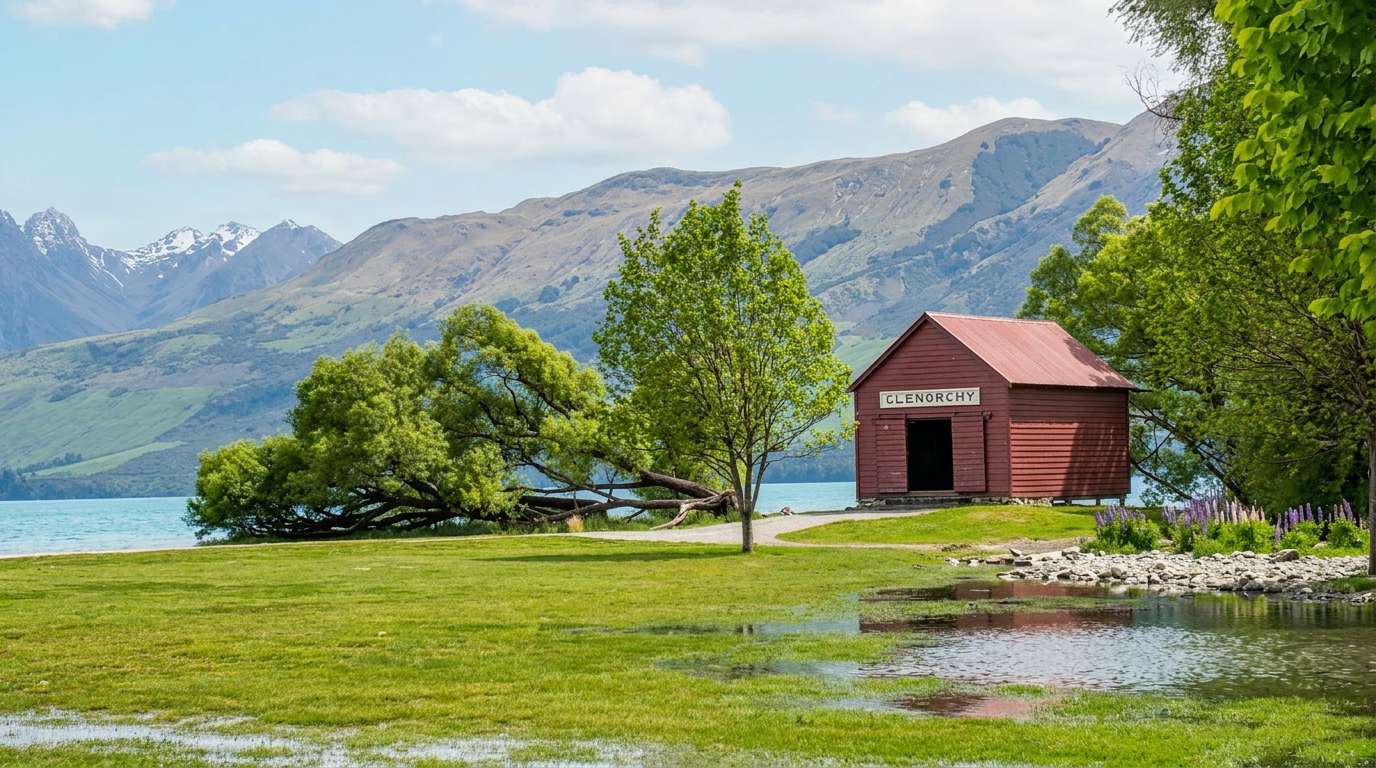
At the far end sits Glenorchy: a wharf, a red shed that has been photographed several million times, and a view up the Rees and Dart valleys into country that has stood in for Middle-earth, Narnia and a good deal else.

Winter is the season this drive is at its best and its most demanding. Snow and black ice are real considerations on the shaded corners, and a light rental car is not the right tool. Take a driver, or take the sealed road slowly and in daylight.

What you get in exchange is a valley under snow with almost no one else in it.

Pinot country

Gibbston Valley

Twenty-five minutes east, through the Kawarau Gorge, into the coldest commercially viable wine country in New Zealand.

Gibbston sits high and exposed, and that severity is the entire point: it produces pinot noir with a structure and perfume that the warmer sub-regions of Central Otago cannot replicate.

In winter, the vines are bare, the cellar doors are calm, and you will frequently find yourself tasting with someone who actually made the wine rather than someone rostered to pour it. For anyone who takes wine seriously, that trade is worth making.

Pair it properly. A morning on the mountain and an afternoon in the gorge is one of the best-balanced days Queenstown offers, and it requires nothing more elaborate than a car and a driver.

Fiordland

Milford Sound and Fiordland

The most common winter question we hear is whether Milford is worth it out of season. It is, but only if you go about it the right way.

By road, Milford Sound is roughly three and a half to four hours each way from Queenstown, which makes a self-driven day trip an eleven- to twelve-hour undertaking on an alpine road that can close at short notice in winter. That is a long day in a short season.

By air, it becomes something else entirely. Scenic flights from Queenstown run around forty minutes each way over the Southern Alps and into Fiordland, and the winter routing—fresh snow on the tops, low sun on the rock walls—is arguably better than the summer version.

Fiordland receives extraordinary rainfall, which means waterfalls, which means the days most people would write off as bad weather are frequently the most spectacular on the water.

Flights are weather-dependent. Build a spare day into the itinerary rather than a spare hour.

Plan early

One Thing to Take From This

Winter does not make Queenstown smaller. It makes it more legible.

The valley in July asks less of you than the valley in January: fewer decisions, fewer crowds, less competition for the good table and the good room.

What it asks instead is that you commit early and choose properly. The properties that make a winter here memorable are a very small set, and they are spoken for months in advance.

If you are considering a Queenstown winter, the conversation is worth having sooner than feels necessary.

Winter does not make Queenstown smaller. It makes it more legible.

Plan your Queenstown winter with Stay Luxe
Choose the right stay before the snow arrives

The best Queenstown winter properties are a small and sought-after set. Secure the right base early, then build the mountains, wine country, historic villages and Fiordland around it.

Explore Queenstown stays

By Stay Luxe